
Our Epic 3-Night Journey through Tambopata, Peruvian Amazon
What is it really like to spend 3 nights deep in the Amazon rainforest? From waking to the sounds of the jungle to heading out on nighttime walks under the canopy, and even sleeping in rooms open to the sights and sounds of nature, our stay in Tambopata was one of the most unforgettable experiences of our travels, and not always in the ways we expected.

Blue Planet Travellers
Peruvian Amazon forest
Nearly 60% of Peru is covered by the Amazon rainforest, nourished by the mighty Amazon River. We spent three nights in the Tambopata National Reserve in the Peruvian Amazon in July, which falls under the dry season, and we are excited to share our experience here.
Day 1: Arrival and Night walk in the Jungle
In the morning, we left our hotel in Cusco and arrived at the airport for our flight to Puerto Maldonado. Puerto Maldonado is a relatively small town located between the Tambopata National Reserve and Manu National Park. Both these areas are well known for wildlife spotting, amazing biodiversity, especially birds, and good accessibility to the Amazon rainforest.
It was a short one hour flight.

Blue Planet Travellers
Tambopata River

Blue Planet Travellers
Tambopata Nature Reserve
On arrival in Puerto Maldonado around noon, we were picked up and taken to the Rainforest Expedition offices close to the airport. Here, we left any excess luggage that we might not need in the jungle. We just took our waterproof backpacks with essentials for the next few days in the jungle. From there, our tour operators continued our journey by road for about one hour to the Tambopata River, where our boats to the jungle lodge were waiting.
Tambopata Nature Reserve
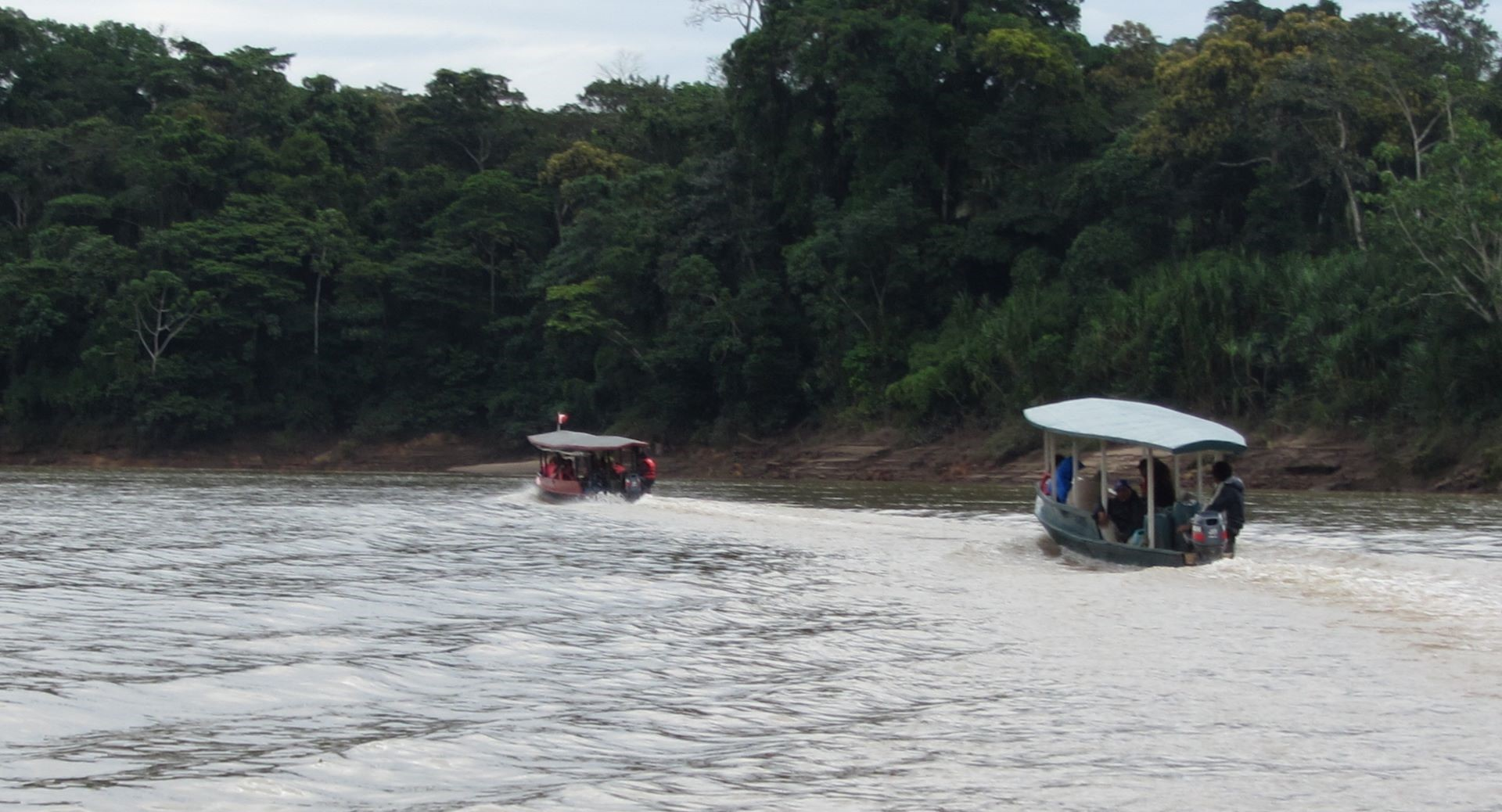
The Tambopata River lies in the heart of the and is the main mode of transportation in this region. The only way to access the resort was by a boat trip on this river, and a boat was already waiting for us.

Blue Planet Travellers
Refugio Amazonas

Blue Planet Travellers
Rooms open to the jungle
Where we stayed
For a 3 day 2 night stay in the jungle, we recommend the following lodge. It is located about 45 minutes upriver from Puerto Maldonado. Refugio Amazonas is ideal for those looking for an introductory experience in the Amazon lasting two or three nights.
Boat Ride on Tambopota and Capybara Encounters
As soon as we got on the boat, we already felt that we were about to begin another wonderful Peruvian adventure. During the boat ride on the Tambopata River, we were given a box lunch. It was actually rice with some vegetables neatly wrapped in banana leaves. We enjoyed the tranquility of the river as we ate.

Blue Planet Travellers
Capybaras

Blue Planet Travellers
Stairs leading to the lodge
During the ride, we saw some capybaras. Capybaras are native to South America and are the largest rodents in the world. They looked like a funny mix between groundhogs and rabbits, about the size of a groundhog but with features that reminded us of rabbits. It was so much fun watching them move around and disappear into the surroundings.
Once the boat ride ended, we got off and climbed a short staircase to reach the Tambopata Nature Reserve office. This was our first step onto Amazon soil, and it already felt incredibly exciting. Here, we got our passports stamped with the Tambopata symbol of a jaguar. It felt even more special to have an Amazon stamp from the reserve on our passports. Varun was especially happy to have his passport stamped.
Stepping Into the Jungle Lodge
It was just a few minutes walk from there to the jungle. We realized that the only way to reach this lodge was by river, and there were no roads leading to it. It was truly amazing to know we were in the middle of the Amazon jungle.
Once we reached the lodge, we were welcomed by the manager and given a briefing about the lodge and the tours planned for the coming days. They strictly maintained a maximum of ten people per guide for all excursions.
We were served a special fruit drink and then shown to our rooms.
A room with no walls, only wilderness
The rooms surprised us. They were mostly open to the jungle, with no windows, making us feel truly immersed in the forest. What really fascinated us were the lockers, meant only for storing food so that no curious animals would wander into our rooms. Varun immediately started saving all his snacks inside the locker. It was such a unique experience, you don’t often get a place where your meals need special protection while your valuables remain completely safe outside. It made us feel both adventurous and connected to the jungle at the same time.

Blue Planet Travellers
Our lunch on the boat

Blue Planet Travellers
Oil lamps under cute, tiny thatched roofs
The beds were covered with mosquito nets, although we did not encounter many mosquitoes inside the room during our visit in July. The room itself gave us a full adventurous feel of what we were about to experience in the coming days.
We refreshed and relaxed in the lodge. They had a beautiful lobby where we could sit and enjoy nature.
By 6 PM, it was already dark. To get to the dining area for dinner, we had to walk across the bridge connecting all the rooms, open to the jungle all around us. It was pitch dark, and the sounds of the rainforest surrounded us, making the walk both thrilling and spooky (We didn’t bring a torch with us, but we realized one would come in handy, just in case we had to walk alone!). Later, we gathered at the large dining area, and they even accommodated our special meal requests.

Blue Planet Travellers
A thrilling walk to the dining hall

Blue Planet Travellers
Night walk in the Amazon forest
After dinner, the resort guide told us that we would go for a night walk. It sounded even more exciting. We were a group of ten, including the guide, and we followed him into the jungle.
When the jungle lights up in the silence of the night
We walked into the forest with our guide, who was the only one carrying a torch. It was absolutely dark, and the sounds of the towering trees swaying in the wind surrounded us. The night weather was perfect. We walked carefully through bushes and between trees, completely absorbed by the jungle. It was an incredible experience. We heard all kinds of animals and insects in the absolute darkness. A mosquito head net or insect repellent will come in handy for night walks, as insects buzz all around in the absolute darkness.
At one point, our guide turned off the torch and asked us to stop and wait. Slowly, the jungle began to illuminate with tiny fluorescent green lights, one by one, like stars. We were told these were fireflies and glowing fungi. It felt surreal. It was as if the night sky had come down to earth, and we were walking through it.
We continued our walk and saw several kinds of frogs and even snakes. Our guide was excellent at spotting tiny creatures and helped us capture some amazing photographs.

Blue Planet Travellers
Our beds, surrounded by the jungle
After walking for about an hour and a half, we returned to the lodge. It had been a long day, and we went to bed. The only lights throughout the property were oil lamps and candles, which were turned off by 9 PM. After that, no lights were allowed, as the area strictly restricts light pollution and there is no electricity in the rooms.
Tip The only way to charge phones and cameras was in the lobby, so carrying a portable charger is very helpful.
As the rooms were open, we started joking and trying to scare each other, wondering who an anaconda would eat first if it came in. It led to some hilarious conversations. Knowing that anacondas, jaguars, and other animals lived in the jungle while our rooms were open made it both thrilling and funny.
Day 2 Macaw Clay Lick and Canopy Tower
The next morning, we began our adventure at dawn with a visit to the Macaw Clay Lick, a must see spectacle of Amazon wildlife.
A gathering of macaws at the clay lick
We learned that several birds such as green winged, scarlet, and blue and gold macaws, along with smaller parrots, come here to ingest clay. However, we mainly saw blue and red macaws, and there were many of them. Their loud calls cut through the silence of the Amazon forest.
The clay in the riverbanks is rich in minerals and helps protect these birds from parasites. It was fascinating to see how nature provides for them and how they instinctively follow this behavior. Besides, this happens here each day as the birds return to the clay lick. We enjoyed watching these magnificent birds. They can be seen until midday, although dawn is when they are most active.

Blue Planet Travellers
Macaws at the clay lick
Later, we returned to the lodge for breakfast. We had some free time and spent it walking around the lodge, observing the forest in daylight.
In the afternoon, we took a short hike to the 40 meter high canopy tower. It involved climbing about 300 steps to reach the top. Along the way, we saw several insects crawling on the staircase, so we had to be careful not to step on them. Many of these insects were brilliantly colored, in shades of black, white, yellow, gray, green and orange giving us a slightly creepy-crawly feeling as they moved along the staircase.

Blue Planet Travellers
Canopy tower

Blue Planet Travellers
Top of the Canopy
Standing above the endless green
As we climbed higher, the forest canopy came into view. The sight of the Amazon treetops was breathtaking. We saw several birds, including some macaws. Watching monkeys jump from tree to tree was incredible, and our binoculars let us follow every agile move in the canopy.

Blue Planet Travellers
Amazon forest canopy
The space on the top of the tower was not very big, so we took turns, one family at a time. We spent about ten minutes there, taking in the beauty before descending.
Later, we spent time in the lobby chatting with other tourists while our cameras and phones were getting charged. We made several new friends and had dinner together.
By 9 PM, the lights were turned off again, and we returned to our rooms. It was another exciting night in the heart of the dark Amazon jungle.
Day 3 Day Walk, Boat Ride and Night Walk
We started the day at a relaxed pace and had breakfast before heading out for a morning walk in the jungle.
Tiny creatures, giant surprises
We learned about various trees and plants and how they adapt to the rainy and dry seasons. This was our first official day walk in the jungle, although we had already done a short walk to the clay lick. We started walking with our tour guide, following his lead and learning so much about the Amazon forest along the way. We were introduced to various trees and plants and how they adapt to the rainy and dry seasons. Along the path, we were offered some fresh fruits and coconut water straight from the Amazon trees, which was a refreshing and delicious way to experience the forest.

Blue Planet Travellers
Leafcutter ants

Blue Planet Travellers
Look how huge they are!
The Ant Event: Leafcutter Army in Action
We also saw large groups of leafcutter ants carrying pieces of leaves. They were much bigger than any ants we had seen before. It felt like witnessing a grand event in the Amazon.
These ants are quite destructive and can even cut through clothes, bags, backpacks, and mosquito nets. We made sure they did not climb onto us, as that would have been quite a situation if they started chewing on our shoes.
The forest continued to amaze us at every step.

Blue Planet Travellers
A morning in the Amazon jungle

Blue Planet Travellers
Tropical fruits
Later, we reached the riverbank and boarded a boat to explore more wildlife. We saw a few caimans both in the water and along the riverbanks, as well as many capybaras.
Life along the silent river
At one point, our boat approached a tree branch extending over the river. Hanging beneath it were rows of bats, all sleeping peacefully in the midday light.

Bats hanging under tree trunk above Tambopata river
It was fascinating to observe how animals and birds coexist in the jungle. There are not many predators unless a jaguar or anaconda appears, which seems to happen rarely.
Later, we went for another night walk in the jungle and wrapped up our day.
Day 4 Time to Leave
It was heartbreaking to leave such a wonderful place. However, we had a flight to catch in the evening, so we departed after breakfast.
Leaving a piece of our hearts behind
We sailed once again along the Tambopata River, followed by another one hour road journey back to the Rainforest Expedition offices to collect our luggage. From there, we headed to the airport.
We then flew to Lima to complete the final part of our Peruvian adventure.
Where to stay
A tip before choosing your stay: When planning a trip to the Peruvian Amazon, it’s important to remember that not all lodges or reserves offer the same experiences. Each region has its own unique wildlife, landscapes, and activities. Even within the same reserve, different lodges may focus on different experiences and activities, some may emphasize wildlife spotting, others river excursions, cultural visits, or canopy adventures. Before booking your tour or lodge, make a list of the activities that interest you most and confirm that the lodge/tour can provide them. This ensures your stay matches your adventure goals and you make the most of your time in the jungle.
Our Two Top Picks in the Tambopata Nature Reserve
- Refugio Amazonas Lodge (Where we stayed)
- We had an amazing experience at this lodge located within the Tambopata Nature Reserve. It is equipped with all the essential comforts, including spacious rooms with private bathrooms, walkways connecting the lodges, inviting common areas, a dining area, and attentive staff. The lodges and rooms are thoughtfully designed to let you fully enjoy the jungle surroundings. The lodge also features its own canopy tower, just a short hike away.
- Posado Amazonas Lodge Posada Amazonas, also located within the Tambopata Nature Reserve, offers experiences very similar to Refugio Amazonas. The lodge provides comfortable rooms with private bathrooms, welcoming common areas, and a dining space, all designed to immerse you in the jungle environment. Activities available here, such as guided rainforest walks, canoe trips, wildlife observation, and canopy tower visits, are essentially the same as those offered at Refugio Amazonas, making it another excellent choice for exploring the rich biodiversity of Tambopata.

@CopyRight Birds nest in each branch at the lodge
Tours We Recommend
- Soak in Peru’s incredible jungle scenery on a multi-day eco-tour of the Amazon.
- 3 Day Tambopata Amazon Jungle Tour at Posada Amazonas
- Indulge in the beauty of Peru’s Amazon jungle while basking in luxury lodging. With the thatched-roof cabanas of Inkaterra Reserva Amazónica as your base, the surrounding rainforest is yours to explore
- 3 Day Tambopata Amazon Jungle Tour at Inkaterra
Tips and FAQ
Best time to visit
The Peruvian Amazon forest is open all year round and has a warm, humid, and tropical climate all year round. May to September is the dry season when most travellers visit. This also aligns with the best time to visit Machu Picchu. We went in July and enjoyed the dry weather, although it was quite hot.
The best time to visit Machu Picchu is May to October, with June and July being peak months for good visibility.
Vaccinations
Yellow fever vaccination is required to enter the Tambopata Nature Reserve, so make sure you are vaccinated and carry your vaccination certificate with you.
Must-haves for the Amazon
- Binoculars – for spotting monkeys, bird watching and other wildlife in the canopy.
- Torch / Headlamp – essential for night walks and crossing bridges.
- Mosquito head net or insect repellent – keeps bugs away during night adventures.
- Waterproof backpack & Ponchos – protect your gear and stay dry in sudden rain.
Leave a Reply