
Sailing the Amazon: Day 2 Adventure to Monkey Island & Puerto Nariño
This is Day 2 of our 4-day Amazon trip. You can see the complete 4 Day Leticia Amazon itinerary, with details and links for each day in our blog.
This day was part of the Amazon tour we booked, which we did as a guided experience. I’ve linked the exact tour we used at the bottom of this post in the Tips & FAQ section.
Today was all about sailing the Amazon River and seeing some amazing places. We visited the giant Victoria amazonica water lilies, saw monkeys on Monkey Island, stopped at the town of Puerto Nariño, and then went deep into the Peruvian Rainforest for an overnight stay.

Blue Planet Travellers
The Amazon River, Leticia
Sailing the Amazon River from Leticia
Our first excitement for the day, we got into the boat and yes we were sailing the Amazon River – the longest river in the world for the first time. Our boat was simple but comfortable, and it carried about 20 people and we were all given life jackets. The boats are used for both tourism and also for transfering goods.

Blue Planet Travellers
The dock at Leticia

Blue Planet Travellers
Sailing the Amazon River
The Amazon River is not only the longest river in the world, but also one of the widest. We visited in December, just as the rainy season was starting. Near Leticia, the river was about 15 kilometers wide and 20 meters deep where we sailed. Locals said that at the end the full rainy season, it can grow even wider, up to 40 or 50 kilometersand reach 70 meters deep. The water was brown and muddy, and it felt amazing to be sailing on such a massive river.
Highlight of the Day: Giant Water Lilies at Flor de Loto Natural Reserve

Blue Planet Travellers
Giant leaves of Victoria Amazonica
Our first stop was the Flor de Loto Natural Reserve. Walking in the rainforest, we came to a pond filled with giant Victoria amazonica leaves, the largest water lilies in the world.
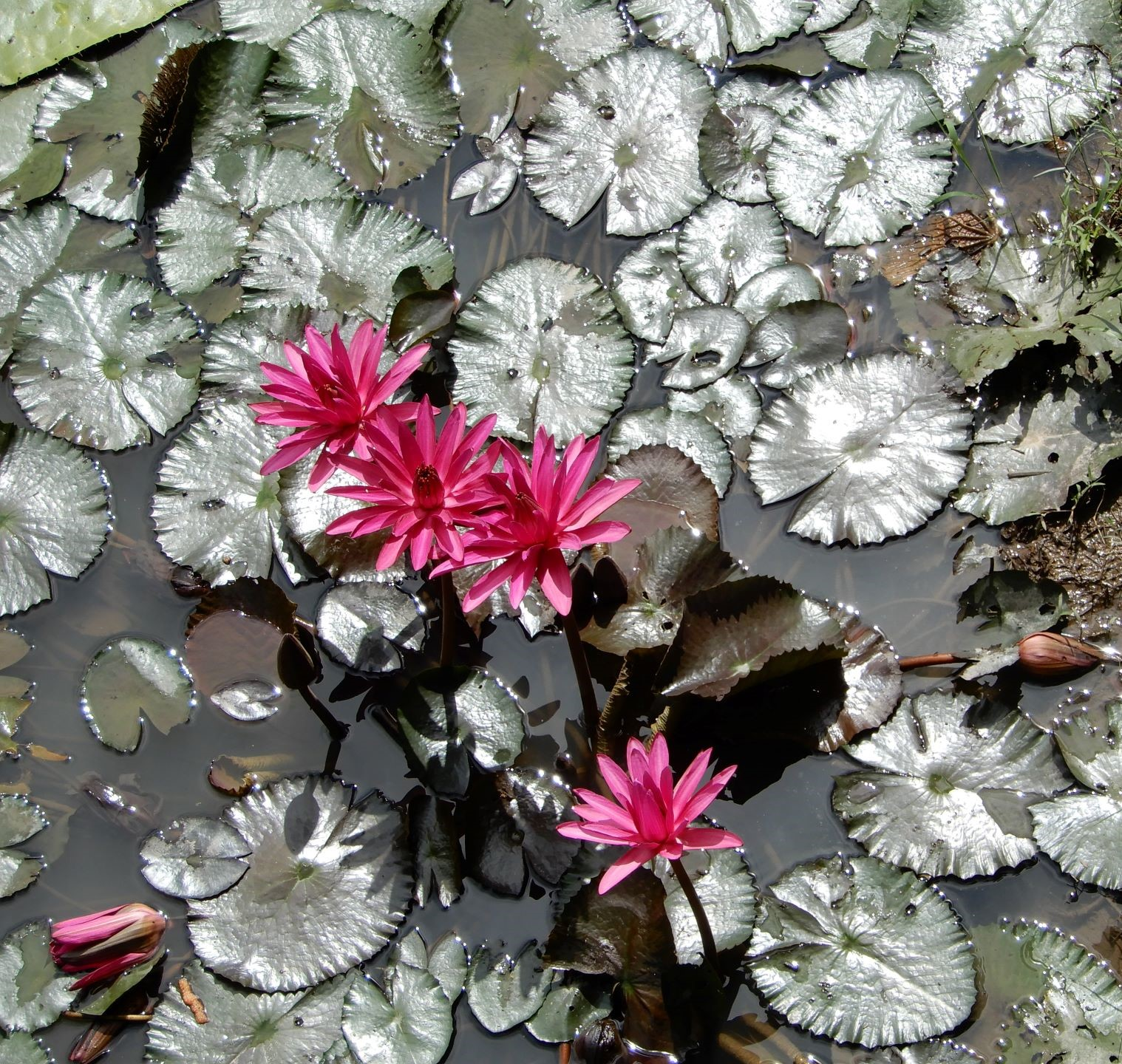
These are the Amazon water lilies with huge leaves. Some leaves were almost 10 feet in diameter! Pink and white lilies grew among them, making the pond look even more beautiful. These giant leaves are thick, rubbery and strong, with thorny rim around them and can hold 35-40 kilograms.
We saw pink and white lilies that had grown in between these large leaves which added to the beauty. It was fantastic. They had built a cabin with pathways around the pond and steps leading down to the water. We had plenty of time to walk around the pond, see how big the leaves were, and even feel them.

Blue Planet Travellers
Pink Lilies of Victoria Amazonica

Blue Planet Travellers
This stop was one of the best parts of the day and really showed how special the Amazon Rainforest is. The Victoria amazonica can only be seen in this part of the world, and it was an amazing feeling to experience it up close.
Monkey Island (Isla de los Micos)
Next, we sailed upstream for about 40 minutes. We saw some dolphins along the way and reached Monkey Island.

Blue Planet Travellers
Monkeys on Isla de los Micos

Blue Planet Travellers
Isla de los Micos
The monkeys jumped on us as soon as we stepped on the island! They were tiny Squirrel Monkeys, used to humans. They liked to pose for photos if we had fruit in our hands. We picked up some mangoes that had fallen from the trees, and many monkeys climbed on us, trying to grab the fruit while letting us take pictures. We even counted who had the most monkeys jump on them, and it was Varun who ended up with the most!

Blue Planet Travellers
Monkeys jumping on me one by one

Blue Planet Travellers
The Squirrel Monkeys just cling on to us
We walked along the trails, saw more monkeys, and learned about their life on the island.

Blue Planet Travellers

Blue Planet Travellers
Ticuna Indigenous Community of Macedonia, Colombia
After Monkey Island, We sailed further upstream another half an hour and made our next stop. We visited the Ticuna indigenous community in Macedonia. The locals performed traditional dances and even had a small ceremony for tourists who had birthdays that week.
They also had beautiful handmade wooden crafts for sale. We bought some large bowls, which will be great for salads at home. It was fun to learn about their culture and see their crafts.

Blue Planet Travellers
Puerto Nariño and Torre Mirador Viewpoint
Next, we sailed another 40 min to Puerto Nariño, the second most important town in the Colombian Amazon. Along the way, we spotted several grey dolphins and one pink dolphin! Pink dolphins (Inia geoffrensis), also known as botos are common in this part of the Amazon and we were lucky to spot one.

Blue Planet Travellers
Puerto Narino
We climbed the Torre Mirador viewpoint, which had several steps. The last 20 steps were open to below and steep, but the view from the top was amazing. We could see Puerto Nariño and the Amazon River. After the climb, we had a traditional Colombian lunch with rice, beans, and salad which is called as Bandeja Paisa. While it is not a dish from the Amazon, it is a favourite Colombian meal.

Blue Planet Travellers
Grey and pink dolphins just sliding into the water

Blue Planet Travellers
Grey dolphin

Blue Planet Travellers
View of the Amazon River from the Torre Mirador

Blue Planet Travellers
Colombian dish – Bandeja Paisa
Crossing into Peru and Sailing into the Rainforest

Blue Planet Travellers
Wading through a river of floating plants in the heart of the Amazon
After lunch, it was time to go deeper into the rainforest. We sailed another half an hour and our group split for different activities, and we transferred to a smaller boat mid-river. It was really thrilling and fun to cross from one large boat to a smaller one in the middle of the amazon river.

Blue Planet Travellers
Sailing the amazon in a small boat

Blue Planet Travellers
The vastness of the Amazon river
We had a wonderful native tour guide who also our translator and boatman. From here it was a private transfer, and he navigated us across the vast waters of the Amazon River. Shortly after, we entered a tributary of the Amazon River, a part of the river that was absolutely enchanting, covered with floating plants, abundant birds, and towering, fully grown trees lining both sides. It was absolutely full of nature and no one around us.

Blue Planet Travellers
Birds and Rainbow along the sail

Blue Planet Travellers
Cranes and Egret
Our boat had to push through the floating plants, clearing a path for our sail, and once we passed, the plants would close behind us. On the other side, more floating plants brushed against the boat, and tiny spiders perched on them occasionally jumped aboard, prompting us to gently send them back into the water with our paddle.

Blue Planet Travellers
Sailing the tributory of the Amazon river

Blue Planet Travellers
Sailing to the Peruvian rainforest
Later, we reached a shallow stretch where the boat could no longer sail on its own and had to be manually pushed. If you plan to step ashore here, make sure to bring rubber water boots.
After about an hour and a half, we arrived at our cabins in the Peruvian Amazon. They were traditional wooden cabins, had mosquito nets, and a waterproof roof. They were simple but comfortable and blended into the rainforest and had proper beds and washrooms. Since this area floods during the rainy season, the cabins are raised on stilts, keeping them safe and dry above the water.

Blue Planet Travellers
Floating plants

Blue Planet Travellers
Our Cabins deep inside the Peruvian Amazon Rainforest
We had dinner prepared by our tour guide, who seemed never to get tired after paddling for such a long time. We relaxed in the hammocks at our resort and there were other tourists around us doing the same. We had a lovely chat with them, one of our favorite things to do while traveling, getting to know fellow travellers.
And the night was full of sounds from insects, frogs, and other wildlife, a real Amazon experience.
As darkness settled, the forest echoed with the sounds of frogs, insects, and other creatures, a real Amazon experience.
Where We Stayed in Leticia
We stayed at Hotel Amazon Bed and Breakfast, which we absolutely loved for its location, it was just a few minutes away from Santander Park and some restaurents.
This beautifully maintained boutique sits right in the heart of the Amazon. The staff were friendly and welcoming. Breakfast was a real treat, a generous spread with so many options, mostly prepared fresh and served right at our table.
Located close to Santander Park, lots of parrots visit the resort early in the morning, a beautiful way to wake up surrounded by nature.
If it’s fully booked, you can also check other options in Leticia: Explore Leticia on Booking.com
Tips & FAQ
Tour We Booked
You cannot explore the Amazon on your own, a guide is required. We booked a guided Tour here
The tour included Amazon river transport, guided excursions, meals on select days, and accommodation in the Peruvian Amazon.
Best Time to Visit Leticia
July – November is the dry season to visit Leticia when the temperatures are high at 37C and humid. The High Water or Flood Season is between December to late June During these months, the Amazon witnesses significant rainfall, flooding vast areas known as Varzeas. The temperatures remain in 20-25C.
We went in late December during the holiday season, and the rains hadn’t fully started. It rained only one night while we stayed in the rainforest cabins in Peru, otherwise, it was sunny and bright. So if you have limited vacation time, December could be a good borderline season to visit. The Amazon rainforest had some puddles that were slippery but still manageable for trekking.
During the rainy season, much of the rainforest becomes flooded, transforming the landscape entirely. Trails that are normally walkable may be submerged, but tours often adapt by taking you through the forest by boat. Experiencing the Amazon from the water offers a completely different perspective. It’s a unique adventure that’s equally thrilling, just in a different way.
What to Wear and Bring
Full-sleeved shirts and pants are comfortable in the Amazon. You’ll be walking through bushes, around monkeys with sharp nails, and just trying to stay clear of insects and mosquitoes. We went in December and were lucky, not many mosquitoes at all, as the rainy season was just starting!
Bring insect repellent and sunscreen, and some towels. The cabins didnt have any towels.
Waterproof boots are provided by the tour companies and are useful for walking in shallow water or transferring between boats.
Victoria Amazonica Tips
Avoid stepping on the Victoria amazonica leaves to help preserve them.
Amazon Rainforest Cabin Rules
No soaps or perfumes are allowed in the Amazon rainforest, especially when staying in cabins.
Monkey Island Tips
If you are allergic to animals or monkeys, tell your guide ahead of time. The monkeys will jump on you as soon as you land on the Monkey Island.
Vaccination
Yellow fever vaccination is mandatory in most regions. Although we weren’t asked for proof here and didn’t encounter many mosquitoes, it’s still recommended.
Leave a Reply