
Day 3: Out of this World Adventure in the Peruvian Amazon Rainforest from Leticia, Colombia
This was our Day 3, we are deep inside the Peruvian Amazon Rainforest.
We had arrived the previous evening, and after a night filled with the sounds of the rainforest and its hdden life, we woke up ready to explore.
We had sailed the Amazon River on Day 1 to reach this part of Peru. This section of the Peruvian Amazon is accessible only from Leticia, Colombia, and lies so deep inside the rRainforest ainforest that there are no nearby towns on the Peruvian side, just endless forest.
Look for our 4 Day Leticia Itinerary here.
Waking Up Deep Inside the Amazon
When we woke up that morning, we realized just how isolated we were. There were no other lodges or cabins anywhere in sight, only a few wooden structures belonging to our lodge, surrounded by dense forest in every direction. Birds filled the air with sound, and the morning sun filtered through the trees. It felt raw, calm, and completely untouched.

Blue Planet Travellers
Our stilted cabins in daylight

Blue Planet Travellers
Black bird commonly seen in Amazon
After breakfast, we geared up for a daytime trek through the Peruvian Amazon. Since it was the rainy season, we were given knee-high rubber boots before heading out.
Trekking the Peruvian Amazon Rainforest

Tall tree with the water mark from the rainy season
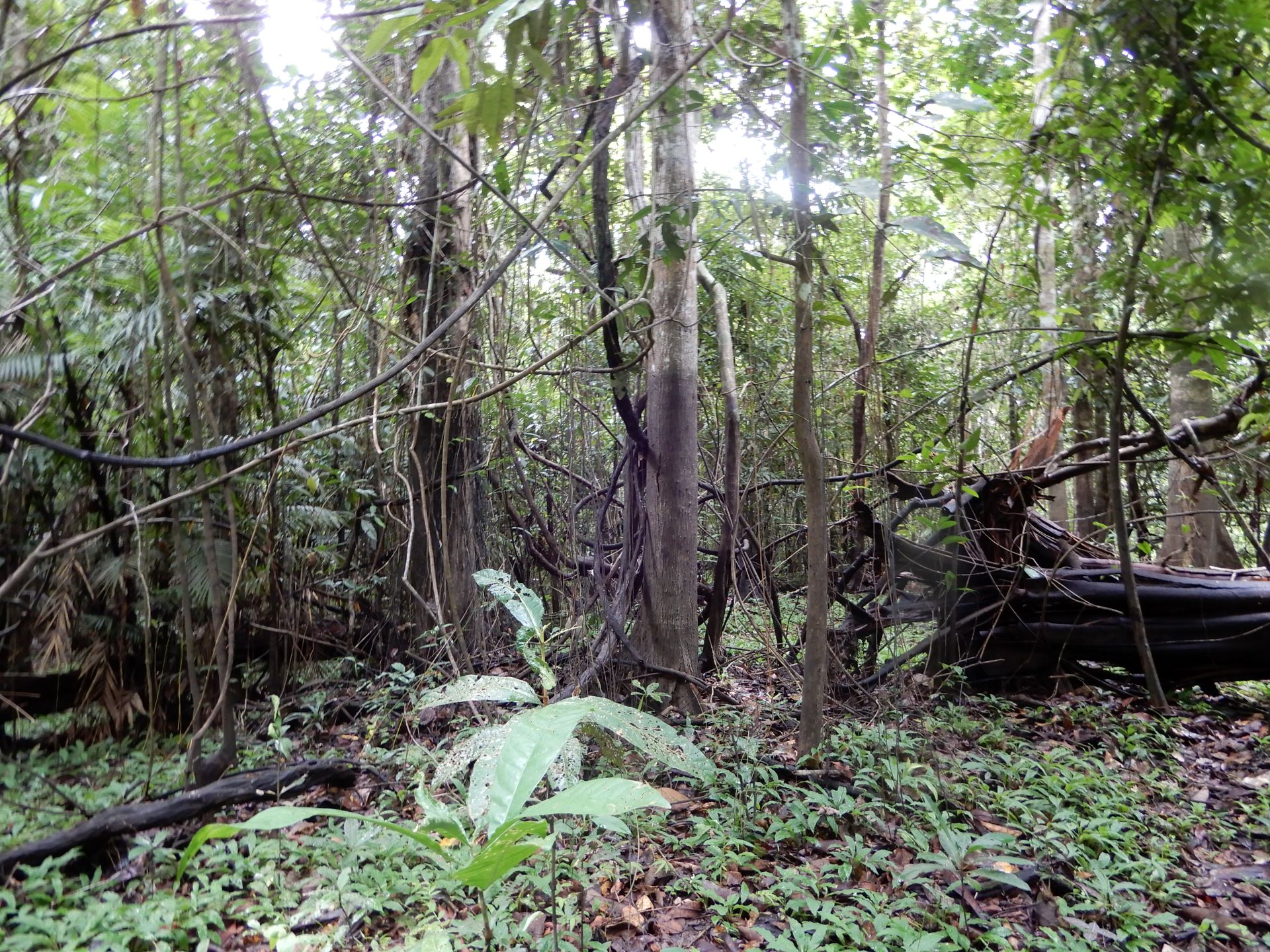
As we started our trek, our native guide explained that the Amazon has over four billion trees, not counting the countless shrubs, plants, and creepers. Everything around us was green, every possible shade of it. The rainforest floor was bushy and uneven, and since it had rained the night before, puddles had formed, making some sections slippery. We held on to each other and made our way deeper into the forest.
We spotted plenty of birds along the way, but the insects that stood out the most were the caterpillars. They were massive, around four to five inches long and almost half an inch wide. I had never seen caterpillars that big before, and they were everywhere. It was creepy enough that I refused to take a picture. Varun took one and promised to share it with me. I’m still waiting, and once I get it, I’ll post it here.
There were no trails in the Amazon, and we had no directions, no destination, really. Our guide told us it would take only a minute to get lost in the vast rainforest, so we simply followed him, enjoying our presence there.

Blue Planet Travellers
Roots of tall trees above ground

Blue Planet Travellers
Peruvian Amazon Rainforest
One fascinating thing we noticed was how many trees had roots rising four to five feet above the ground. This is how they adapt to the rainy season, when the forest floor is completely submerged.
We were there in December, just as the rains had started, so the rainforest was still walkable, though slippery in places. In January and February, this entire area floods, and kayaking becomes the only way to explore. Since we could walk, we took our time learning about the flora and fauna and watching birds.

Blue Planet Travellers
Walking through rain puddles in the Rainforest

Blue Planet Travellers
Getting lost in the Rainforest
The soil of the Amazon rainforest isn’t nutrient-rich enough to support its billions of trees and plants on its own. Instead, nutrients come from the leaves that fall to the forest floor, feeding the soil and sustaining the trees above.
After about two and a half hours, we returned to our cabins to rest before the next adventure.
Kayaking Through a Rainforest Tributary
Our next expedition was kayaking through a river tributary right in front of the lodge. The kayaks were docked along the riverbank, but getting to them was an adventure on its own. We had to climb down a tiny muddy slope, and one by one, we slipped and fell. It was hilarious, and luckily, we were already dressed to get dirty.

Blue Planet Travellers
Paddling through the Amazon’s lesser-known waters
Once we finally got into the kayaks, we paddled through floating plants, stopping whenever we spotted birds. The kayaks were designed differently from the ones we were used to in North America, and our backs started aching slightly, but the experience was completely worth it. The greenery, muddy water, silence of the rainforest, and the feeling of being the only people there made it unforgettable.
After about an hour, we returned to the lodge, showered off the mud, had lunch, and spent the afternoon relaxing in hammocks. Taking a nap in a hammock, right in the middle of the Amazon, was something special.

Blue Planet Travellers
Hammock time in the Peruvian Amazon
A Night in the Darkest Rainforest and Alligator Spotting
After dinner, it was time for our nocturnal expedition. We climbed back down to the boat, and this time we weren’t given headlamps. The experience was meant to be purely nocturnal. Our guide paddled the boat and used his headlamp only when necessary.

Holding the Amazon alligator in hand
The goal was to spot alligators. Our guide had an incredible connection with the Rainforest and could easily spot them in the muddy water. When he turned off his headlamp, the alligator’s eyes glowed in the dark. He tried several times until he found a baby alligator so we could safely hold it.
He showed us exactly how to hold it so it wouldn’t bite, and each of us got a chance.
Afterward, he released it back into the water and made sure we took photos so rainforest authorities would know it hadn’t been taken away.

Here’s one more

Blue Planet Travellers
Sending our new friend back into the water
As we went deeper, the darkness became absolute. Some parts of the Amazon are known to have the darkest skies in the world, and we were right there. There was no light pollution at all. I couldn’t even see myself. Towering trees formed silhouettes against the sky, which was filled with millions of stars, including the Milky Way. Below us, firefly eggs glowed fluorescent green on floating plants, while fireflies drifted around us. We didn’t move or speak. We just sat there and absorbed it. There are no words to truly describe it. It was an out of the world experience.
This night experience remains one of our all-time favorites and easily ranks among the top three experiences we’ve had across the 47 countries we’ve visited. After about an hour and a half of drifting with no destination, we returned to the lodge.

Blue Planet Travellers
Our nocturnal forest journey, surrounded by fireflies
Before calling it a night, we went on another nocturnal rainforest walk, this time, on land in the Peruvian Rainforest. We spotted tarantulas, spiders, and scorpions before finally heading back to the lodge to end another unforgettable night in the Amazon.
Tips & FAQ
Tour We Booked
You cannot explore the Amazon on your own, a guide is required. We booked a guided Tour here
The tour included Amazon river transport, guided excursions, meals on select days, and accommodation in the Peruvian Amazon.
Best Time to Visit Leticia
July – November is the dry season to visit Leticia when the temperatures are high at 37C and humid. The High Water or Flood Season is between December to late June During these months, the Amazon witnesses significant rainfall, flooding vast areas known as Varzeas. The temperatures remain in 20-25C.
We went in late December during the holiday season, and the rains hadn’t fully started. It rained only one night while we stayed in the rainforest cabins in Peru, otherwise, it was sunny and bright. So if you have limited vacation time, December could be a good borderline season to visit. The Amazon Rainforest had some puddles that were slippery but still manageable for trekking.
During the rainy season, much of the rainforest becomes flooded, transforming the landscape entirely. Trails that are normally walkable may be submerged, but tours often adapt by taking you through the forest by boat. Experiencing the Amazon from the water offers a completely different perspective. It’s a unique adventure that’s equally thrilling, just in a different way.
Vaccination
Yellow fever vaccination is mandatory in most regions. Although we weren’t asked for proof here and didn’t encounter many mosquitoes, it’s still recommended.
What to Wear and Bring
Full-sleeved shirts and pants are comfortable in the Amazon. You’ll be walking through bushes and just trying to stay clear of insects and mosquitoes. We went in December and were lucky, not many mosquitoes at all, as the rainy season was just starting!
Carry a lightweight rain jacket suitable for both summer and rainy seasons.
Bring insect repellent and sunscreen, and some towels. The cabins didnt have any towels.
Waterproof boots are provided by the tour companies and are useful for walking in shallow water or transferring between boats.
Amazon Rainforest Cabins & Rules
No soaps or perfumes are allowed in the Amazon Rainforest, especially when staying in cabins.
The cabins are built on stilts as during the rainy season, the cabins can turn into floating cabins.
Be Prepared for Cold Showers
Showers are often cold here, so be ready to freshen up without warm water.
Cash
Sometimes, even when the tour includes boots, you might be asked to pay $10 for a pair. You may need cash at the lodge for the boots and for tipping.
Electricity
Electricity supply is limited as this is a low-light restriction area of the Amazon Rainforest, meant to help preserve nature. As a result, all lights are automatically turned off at 9:00 pm. Where we stayed, there were no plug points inside the cabins, and only one charging point was available in the dining area.
Food
Vegetarian food options are very limited. Carry your own food if needed.
Leave a Reply