
Visiting Iguazu Falls in Argentina: Top Trails, Views & Travel Tips
Iguazu Falls, one of the natural wonders, is located on the border of Argentina and Brazil. The rainy season at Iguazu Falls is typically from December to March, coinciding with the local summer. During this period, the falls are at their most dramatic, with higher water flow, though frequent rain and high humidity. If you want to see the falls with the highest rainfall, the best time is November and December. The Iguazu River forms approximately 275 individual waterfalls, and during the rainy season, additional smaller falls may appear. Together, these waterfalls discharge around 1.5 million litres of water per second. The height of the falls ranges from 64 to 82 metres.
Iguazu Falls is shared by both Argentina and Brazil, offering two unique perspectives of this natural wonder. If you’re visiting the Argentina side, you might also want to check out the Brazilian side for stunning panoramic views. Check out our guide to visiting the Brazilian side of Iguazu Falls for more details.”
Our Iguazu Falls Experience (Argentina Side)
We started our Iguazu Falls adventure from the Argentinian side. We wanted to experience the waterfalls from above, so we chose the Upper Circuit. To reach the trailhead, we took the Ecological Rainforest Train to Cataratas Station. It was about a 20-minute walk along the park’s pathways to reach the train station.

Ecological Rainforest Train to Cataratas Station
At Cataratas Station, there were restrooms and a small store that sold snacks. From there, we walked roughly 150 meters to begin the Upper Circuit. The walkways were flat, accessible, and without any stairs, making it a comfortable stroll.

Iguazu Falls – Argentina
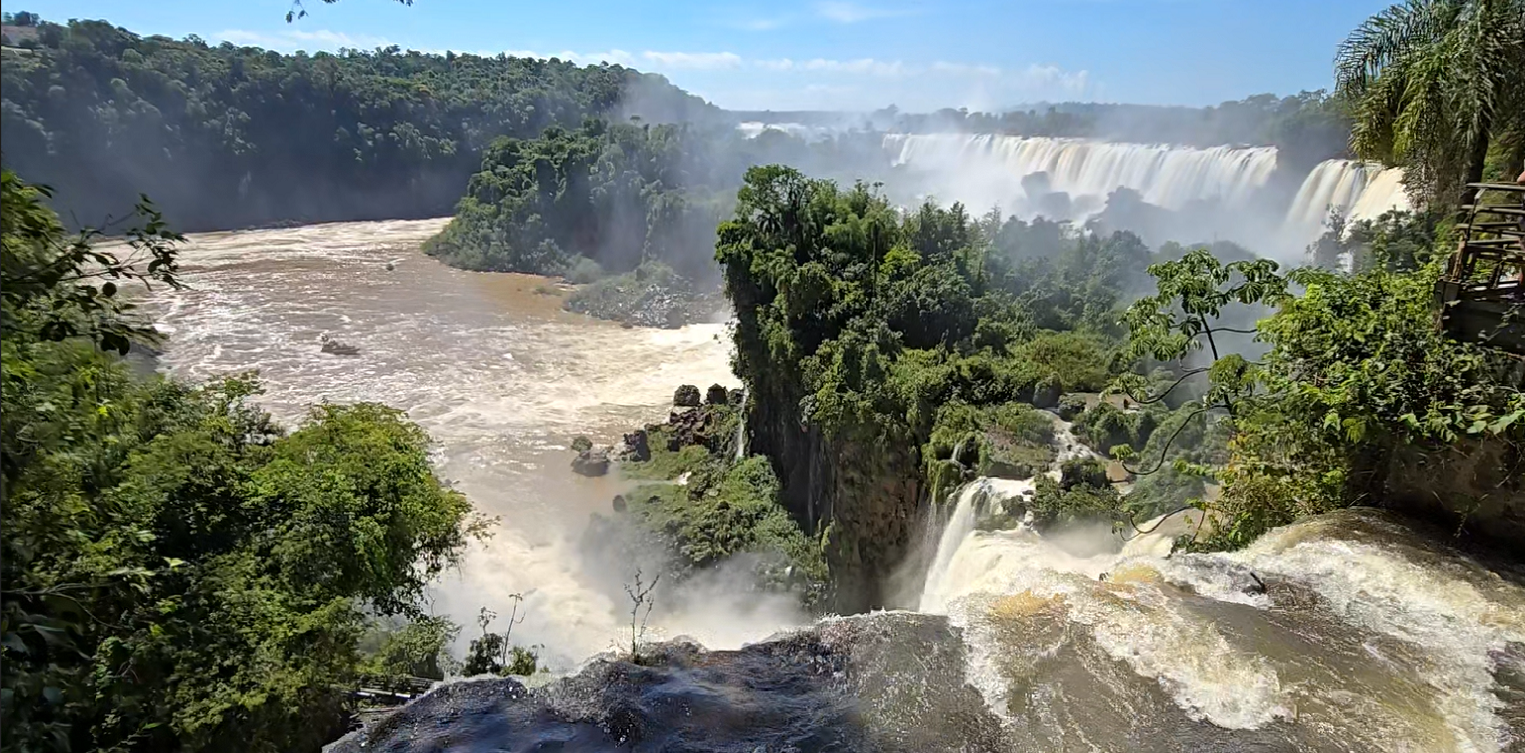
We stopped at several scenic viewpoints to admire the powerful waterfalls, and each balcony offered breathtaking perspectives. We were absolutely stunned by the views of Mbigua, Dos Hermanas, Chico, Ramírez, Bossetti, Adán y Eva, and Bernabé Mendez falls.

The view from the walkway that lead us to the top of the falls
The elevated walkways, built just a few feet above the waterfalls with grid flooring, offered thrilling, up-close views from the front and even slightly from below. It was both safe and exhilarating.

Salto San Martín
Eventually, we walked over the Upper Iguazu River to reach the edge of Salto San Martín. The entire circuit is approximately 2 kilometres, and we looped back to Cataratas Station to continue our journey.
Then we walked to the Adventure Boat ride station and waited for our turn to get into the yellow open Jungle Bus. We had a park guide providing commentary about the local flora, fauna, and some details about the falls. The bus passed through the subtropical rainforest for about five minutes before reaching the boat embarkation point.

Yellow Jungle bus
We descended around 100 steps to the river dock, where we were given life jackets and large waterproof bags to store our belongings. We just had a well-covered phone with us.
Once on the water, the boat first took us around some of the waterfalls in the region, allowing us to enjoy views and take photos, before heading to the real adventure, getting completely drenched under Salto San Martín. We didn’t bother with ponchos, there was no escaping the soak. The boat drove right under the falls, and the power of the water was overwhelming.

A view of the falls from the Iguazu river.
At one point, we had to turn our faces away just to catch our breath. Varun sat on the side closest to the falls and took the full force, but we were already soaked before the boat turned. I was breathless, with only white mist in sight. We all agreed the boat ride was the most exciting part of our Argentina trip. The entire experience was so well organized that even with the crowds, we could relax and enjoy every moment.

Waiting for our turn to get drenched under San Martin
After the ride, we returned the gear and climbed back up to catch the yellow Jungle Bus. It was so hot that our clothes dried within five minutes of the bus ride!

Blue Planet Travellers
View while sailing the Iguazu river

Blue Planet Travellers
Right under the falls – comletely drenched and out of breath
From the Adventure Boat station, we walked back to Cataratas Station which was about 5 min walk and took the train to Devil’s Throat, the most impressive viewpoint at Iguazu Falls. It is a horseshoe-shaped falls at the border of Argentina and Brazil. The walkway took us right to the edge, allowing us to feel the waterfall beneath our feet. The thunderous roar and the immense drop of water made it an unforgettable end to our day.

View from Devil’s throat

Devil’s throat
We managed to complete the Upper Circuit, Boat Ride, and Devil’s Throat all in one day and still had plenty of time to relax and soak in the atmosphere. We returned with full hearts, tired legs, but not exhausted. It was a perfect day.
Where to stay
Before choosing a hotel, it helps to know the main cities where you can base yourself. You can stay in Puerto Iguazú on the Argentine side or Foz do Iguaçu on the Brazilian side. Both cities provide easy access to their respective sides of the falls, and it’s simple to cross the border from one to the other if you want to explore both in separate days.
Recommended Hotels:
Hotel Saint George in Puerto Iguazu This hotel is in the middle of the town, surrounded by restaurants. The rooms were large, and it had a beautiful garden by the pool.
Hotel Rafain Centro The hotel is in a central location, about a 7-minute drive from Iguazu Falls. The breakfast was really good.
Tours We Recommend in Iguazu
The easiest way to visit the Brazilian side of Iguazu Falls on a day trip from Puerto Iguazú (Argentina) is by booking a guided tour. We recommend the following tour:
- Puerto Iguazu – Iguazu falls Brazilian side
The tour operator handles the transfer and visa stamping and paperwork at the Argentina-Brazil border and arranges entry into Iguaçu National Park. Always check your country’s visa requirements when travelling between Argentina and Brazil to avoid any issues at the border. - Puerto Iguazu -Iguazu falls and Boat Ride Argentinian side Our tour guide picked us up from Puerto Iguazú and took us straight to the falls. The tickets were all arranged in advance, and the boat ride was included. Just a heads-up: the boat ride is only for those aged 12 and above, so younger kids can’t go on it.
These tours are a must when visiting Argentina and can easily be added to your 2-day Iguazu Falls itinerary.
Tips and FAQ
Closest Airport
There are several airports near Iguazu Falls on both the Argentinian and Brazilian sides. The nearest airport on the Argentinian side is Cataratas del Iguazú International Airport (IGR), located just 7.7 km away. Other nearby airports include Foz do Iguaçu International Airport (IGU) in Brazil (8.6 km), Ciudad del Este Airport (AGT) in Paraguay (45.5 km), and Cascavel Airport (CAC) in Brazil (120.7 km).
Best Time to Visit
Iguazu Falls can be visited year-round, with each season offering a different experience.
December -February (Summer / Peak Season)
These are the hottest months, with temperatures ranging from 30-40°C. This is also when the waterfalls are at their fullest due to higher rainfall. The increased water flow creates powerful cascades and refreshing mist along the trails, you’ll likely get soaked, which is all part of the experience.
March – May (Autumn)
Temperatures are milder, ranging from 16-27°C, making it a pleasant time to visit. However, humidity levels can still be quite high.
June – August (Winter)
Cooler and generally more comfortable, with temperatures between 10-20°C. Water levels may be lower compared to summer months.
September – November (Spring)
Temperatures range from 14-26°C, offering a balance of comfortable weather and moderate water flow.
Located within a subtropical rainforest, Iguazu Falls receives rainfall throughout the year, so occasional showers are always possible.
Our recommendation: Visit in December to see the waterfalls at their most powerful. Although it’s one of the hottest months, the trails on both the Argentina and Brazil sides wind through the rainforest, which keeps the walk cooler. At nearly every lookout, you’ll be treated to a refreshing shower from the falls, a most important part of the Iguazu experience.
Separate days for each side
We recommend exploring the Argentinian and Brazilian sides on separate days. Each offers a unique perspective, the Argentine side has more trails and closer views, while the Brazilian side provides panoramic vistas along with closer views. Don’t skip either!
What to pack for Iguazu Falls
Bring ponchos, phone covers, and camera protection. There are no shops for rain gear on the Trails of Iguazu both in Argentina and Brazil. Many tourists couldn’t finish the trails because they were worried about getting their phones and cameras wet, be prepared!
Boat Ride Essentials
On the boat under the Iguazú Falls, you’ll get fully geared up for the splash! Everyone goes barefoot, so no need for shoes or slippers. You’ll also receive a massive waterproof bag to toss in your phone, keys, shoes, or anything else you want to keep dry. And, of course, a life jacket is provided to keep you safe as you enjoy this unforgettable, soaking adventure. Reminder, the boat ride is only for those aged 12 and above, so younger kids can’t go on it.
Circuit suggestions
- Doing the Upper Circuit, Devil’s Throat, and the Boat Ride gives you a well-rounded experience.
- If you’re traveling with kids under 12 who can’t do the boat ride, definitely add the Lower Circuit. This trail takes you to the base of the falls for a closer, immersive experience. The start of the Lower Circuit is conveniently located near the end of the Upper Circuit.
Photo tips
- The Lower Circuit and boat ride offer the best opportunities for close-up shots. Use waterproof gear or GoPros for action shots under the falls.
Time management
- Even with all three experiences in one day, we didn’t feel rushed. Start early and pace yourselves; the park is well-organized.
Leave a Reply