
20 Things to Do in Japan Beyond Sightseeing: Unique Experiences Every Traveller Should Try
When we travel, we’re usually drawn to places with dramatic landscapes, incredible architecture, iconic viewpoints, the tallest building, the highest summit, the largest lake, or something along those lines. These are often the highlights that make their way onto bucket lists and travel brochures.
But Japan was different.
While Japan certainly has beautiful scenery and famous landmarks, what stayed with us most were not the places themselves, but the experiences. As we travelled through Japan with our family, we found ourselves connecting with the country in ways we hadn’t expected. Through its culture, traditions, food, and everyday rituals, Japan has a way of quietly drawing you in. Rather than simply visiting attractions, you become part of the experience itself.
Many of these moments weren’t tied to a single destination. They could be experienced in different parts of the country and easily added to almost any part of the itinerary. Because many of these experiences were both uniquely Japanese and completely new to us, they became some of the most meaningful memories of our trip.
Below are 20 experiences that helped us connect with Japan beyond sightseeing. We hope they inspire you to create your own meaningful moments as you explore this remarkable country.
Planning your first trip to Japan? Our 2-week Japan itinerary covers the essential cities, attractions, transportation tips, and practical advice to help you make the most of your time without rushing from one place to another.
1. Stand Beneath Cherry Blossoms in Full Bloom

Seeing the cherry blossoms (sakura) in full bloom was one of the experiences we were hoping to have in Japan. The timing can be tricky because the blossoms usually last only about a week, and the season moves gradually from the warmer southern regions to the colder northern parts of the country. We had planned our visit around the expected start of the cherry blossom season, hoping to catch the first blooms. However, the blossoms arrived earlier than expected. By the time we arrived, we were already in the middle of the bloom period, which turned out to be a wonderful time to experience them. While many trees were still covered in flowers, others had started shedding their petals, creating a soft pink carpet beneath the trees. As we walked around, the breeze carried the petals through the air, creating a moment that felt uniquely Japanese. It was one of those simple experiences that didn’t require a special attraction or viewpoint, just being there at the right time was enough.
We saw delicate light pink blossoms, slightly deeper shades of pink, and even white flowers, adding a beautiful variety as we walked through the parks and streets.
I moved from one tree to another, standing underneath different canopies. Sometimes, the best way to experience the cherry blossoms is not from a viewpoint or behind a camera, but simply to stand beneath the trees and take it all in.
2. Soak in an Onsen or Relax in an Ashiyu

If there is one Japanese experience you should not miss, it is soaking in an onsen. Onsens are traditional Japanese hot spring baths, naturally heated by geothermal activity from Japan’s volcanic landscape. For centuries, these mineral-rich waters have been enjoyed by locals for relaxation and as a way to refresh the body and mind.
During our trip, we stayed at a hotel that offered private onsen reservations. This worked well for us because public onsens have a strict policy of bathing without clothing, as this is part of the Japanese onsen tradition. Having a private option allowed us to enjoy this unique cultural tradition in a more comfortable way as a family.
The hotel had time slots that needed to be reserved, and we quickly learned that the popular evening timings fill up fast, especially after a full day of exploring.
Most onsens operate from late afternoon (around 3pm) until midnight, so planning ahead is a good idea if a private bath is something you would like to experience.
For those who would like to experience a hot spring in its natural setting but are not comfortable with the full bathing experience, many towns also offer foot baths, known as ashiyu. These allow visitors to soak their feet in naturally warm spring water while enjoying the atmosphere of the onsen area. You may come across Ashiyu’s in the corner of streets in the city’s that have onsens.
Japan has countless onsen experiences, from simple local bathhouses to luxurious hot spring resorts surrounded by mountains, forests, or ocean views and ofcourse street side Ashiyu’s. Many hotels and ryokans offer public baths, private reservable baths, or even rooms with a small private onsen. These stays can be quite expensive, especially during peak seasons, so choosing the right time to visit can make a big difference.
What makes an onsen special is not just the warm mineral-rich water, but the feeling of stepping away from the rush of travel. After busy days of sightseeing, walking, and exploring, sitting quietly in the bath, relaxing our tired muscles, and enjoying the peaceful surroundings gave us a chance to experience a slower and more traditional side of Japan.
3. Stay in a Ryokan

If you want to experience a more traditional side of Japan, staying in a ryokan is something you should add to your itinerary. A ryokan is a Japanese-style inn that offers a glimpse into a way of living that has been preserved for generations. It is not just a place to sleep, but an experience built around Japanese hospitality, simplicity, and attention to detail.
During our trip, we stayed in a ryokan and were immediately impressed by how beautiful and well-maintained everything was. The rooms had traditional tatami flooring made from woven mats, which gave the space a calm and natural feel. What surprised us most was how different the room setup was from a regular hotel. There were no shelves, no wardrobes filled with storage space, and very little furniture. Whether it was our glasses, clothes, or suitcases, everything had to be placed neatly on the floor. Even sitting on the floor became part of the experience, and at night, futons were laid out directly on the tatami mats for sleeping.
One of the things we enjoyed was wearing the yukata provided by the ryokan. These casual kimono-style robes are given to guests during their stay, and many visitors wear them while walking around the property. Along with the yukata, we were also given traditional geta, wooden sandals that added to the experience. Everyone was comfortably walking around the ryokan wearing their yukata and geta, which made the entire property feel like a step back in time. We were also told that when the weather is comfortable, guests can wear them outside the property as well.
We noticed that many places provided the same color or pattern for their guests. One morning, I joined my family a little late for breakfast and walked into a room full of people wearing the same yukata. It was a funny moment because it took me almost 10 minutes to find my family among everyone dressed in the same outfit!
Many ryokans also offer traditional meals (Kaiseki), seasonal dishes, and sometimes onsen facilities, making the stay feel very different from a regular hotel experience. For us, staying in a ryokan was a chance to slow down, experience Japanese traditions up close, and appreciate the beauty of a simpler way of living.
4. Boil Eggs in a Natural Hot Spring

One of the simple yet unique experiences you can have in Japan is boiling your own eggs in naturally heated hot spring water. In many hot spring towns, visitors can boil eggs using naturally heated hot spring water. Waiting for the eggs to cook and enjoying them fresh from the spring is a simple but memorable experience that connects you with nature.
When we visited, we saw several people already boiling their eggs in the hot spring water. The eggs were available from nearby shops, usually packed in small bags with two or three eggs in each. Since all the bags looked the same, everyone marked their sticks with their name, a symbol, or any personal sign so they could identify which eggs belonged to them.
We were told that it would take around 20 minutes in the 80°C water, so we patiently waited and took our eggs out after about 20 minutes. However, when we opened them, they were still quite runny and undercooked. Later, we learned that it takes about 55 minutes in 80°C water, so we tried that and it worked much better for us.
Most hot spring egg stations have signs showing the approximate temperature of the water, so you know what to expect before placing your eggs in. However, keep in mind that these are open-air hot springs, and the actual water temperature can be affected by the outside weather conditions. On colder or windy days, the water may cool slightly, which can affect how long your eggs take to cook. So, if you plan to try this experience, allow enough time and enjoy the wait, it is all part of the fun.
5. Travel by Train in Japan

Blue Planet Travellers
Travelling by train in Japan is an experience by itself. Once you arrive, you quickly realize how organized, efficient, and easy the train system is. The trains are clean, well maintained, and known for their punctuality. Although they are famous for being on time, delays can happen, and we did experience a few during our trip. However, they were minor and did not affect our plans.
One thing that stood out to us was the atmosphere inside the trains. Despite the number of people using the railway system every day, the trains remain remarkably quiet. Most passengers speak softly or not at all, and everyone seems to respect the shared space. There is a calmness inside the trains that we had not experienced elsewhere.
During our travel, one thing that surprised us was how often people seemed to travel alone on the trains. We rarely saw families or groups travelling together. Most passengers appeared to be travelling individually, quietly enjoying their own journey.
What stood out even more was the kindness shown toward us as a family. Many times, when one of us was seated and another was standing, the person sitting nearby would quietly move to another seat so we could sit together. This happened several times during our trip, and these small gestures showed us the thoughtfulness and respect that are part of everyday life in Japan.
The Shinkansen, Japan’s famous high-speed bullet trains, make long-distance travel even more memorable. Reaching speeds of over 300 km/h, these trains are incredibly fast, but the journey itself is just as enjoyable. Many routes pass through beautiful landscapes, so sitting by the window and watching Japan’s countryside pass by becomes part of the experience.
One thing we noticed before our trip was that there is a lot of information about Japan’s train system, with countless lines, train names, and route options. It can feel overwhelming at first, but it does not need to be. Our advice is simple: do not spend too much time trying to memorize train lines. For most visitors, you only need to understand that Shinkansen trains are used for longer distances, while local trains connect cities, attractions, and stations. Once you are there, google maps – public transit make the process much easier. You can use them to find out the local lines and how to get to each location easily.
We travelled on more than a hundred local trains during our time in Japan, and surprisingly, we never found them uncomfortably crowded. Even when seats were full and we had to stand, there were usually only a few other passengers standing nearby. The experience was always orderly and comfortable.
Travelling by train in Japan is not just about getting from one place to another. It is about experiencing the organization, efficiency, scenery, and more that make everyday travel in Japan memorable.
6. Visit a Shrine and Bow Twice, Clap Twice

Blue Planet Travellers
Shinto shrines are found throughout Japan and offer a peaceful escape from busy streets. As you enter a shrine, you will often pass through a torii gate, a traditional Japanese gate (usually orange in color) that marks the entrance to a sacred space and separates the everyday world from the spiritual grounds of the shrine. After passing through the torii gate, washing your hands at the purification fountain, and observing local customs provide insight into Japan’s spiritual traditions. One of the most common rituals when visiting a shrine is the simple act of bowing twice, clapping twice, and bowing once more before offering a prayer or making a wish. This small gesture is a way to show respect and connect with the traditions that have been followed for generations.
Like many experiences in Japan, visiting a shrine is something you can enjoy throughout the country. Some shrines are located in incredible settings, from hilltops offering beautiful views to peaceful locations along the coast. We found that the surroundings, location, and approach to the shrine often became just as memorable as the shrine itself.
Since there are countless shrines to choose from, visiting too many can become repetitive and overwhelming. Our suggestion is to select a few that are known for their unique locations, history, or architecture in each city rather than trying to visit every shrine you come across. Many shrines have small offerings, entrance fees, charms, fortunes, or special activities that come with a cost, and these expenses can add up quickly for a family.
During our travel, we also noticed that while the shrine buildings themselves often share similarities inside, it is the overall setting, the shrine grounds, location, entrance paths, and atmosphere, that makes each shrine special. The walk through the shrine grounds, the approach under the torii gates, and the peaceful surroundings often became the highlights of the experience.
If you have already visited the famous shrines and are trying to keep your trip within a budget while still having time to explore more, simply visiting the outside of the shrines and walking through the grounds is still a wonderful experience, and you will not feel like you missed out.
7. Visit a Temple and Burn Incense sticks (Osenko)

Japan’s Buddhist temples range from grand historic complexes to small neighbourhood sanctuaries. Exploring these sacred spaces offers a deeper understanding of Japanese culture, history, and spirituality. Like shrines, which are associated with Shinto traditions, Buddhist temples also have their own unique rituals and atmosphere.
During our temple visits, we bought some osenko and placed them in the large incense burner, known as a jokoro. These incense burners are often located directly in front of a Buddha statue or positioned along the same line of sight toward the statue, creating a meaningful connection between the offering and the place of worship.
Once we lit the osenko, we gently waved our hands to direct the smoke from towards us, as it is traditionally believed to bring blessings and purification.
Standing there surrounded by the fragrance of incense and the peaceful temple surroundings became one of those simple moments that helped us slow down and appreciate a different side of Japan’s spiritual traditions. This was another deeply personal experience for us.
8. Sit Quietly in a Zen Garden & Meditate

Blue Planet Travellers
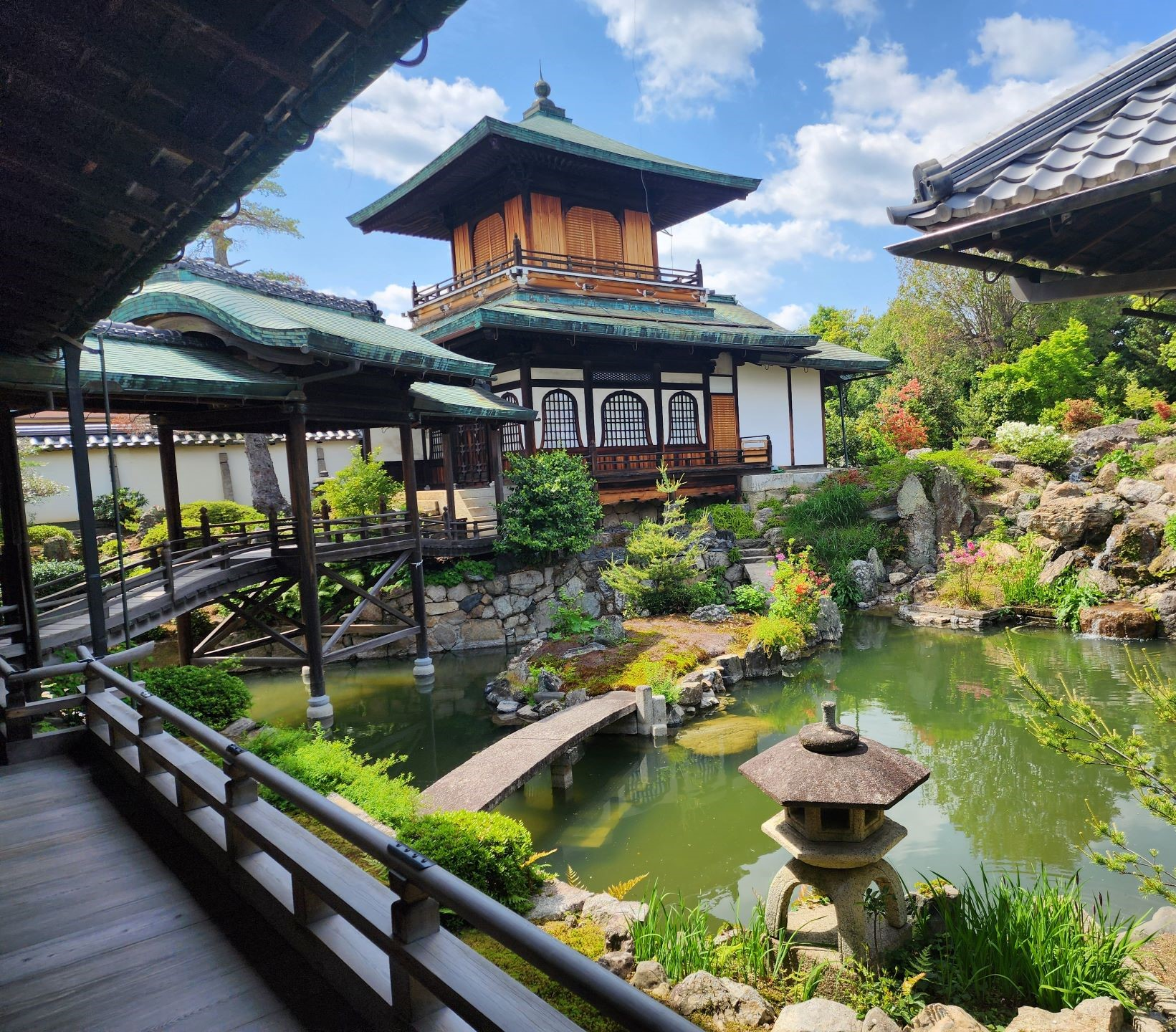
Take a few minutes to sit quietly in a Zen garden and simply observe. Like many places in Japan, these gardens are designed to be peaceful spaces where visitors are encouraged to keep conversations to a minimum and respect the calm atmosphere.
Most Zen gardens have benches or designated viewing areas where you can sit and take in the surroundings. Depending on the garden, you may find carefully raked gravel, beautifully arranged rocks, colourful koi ponds, blooming flowers, and lush greenery, all thoughtfully designed to create a sense of balance and tranquillity.
We visited early in the morning when the gardens were especially peaceful. Meditating in a public space felt a little difficult for us, so instead we simply sat quietly, listened to the sounds of nature, and admired the stillness of nature in silence. Those few minutes of slowing down became another memorable experience that helped us appreciate a quieter side of Japan.
9. Try Freshly Made Okonomiyaki

Often called Japan’s savoury pancake, okonomiyaki is comfort food at its finest. Watching it being cooked on a hot griddle and enjoying it fresh is as much a cultural experience as it is a delicious meal.
One thing we loved was that many restaurants let you customise your okonomiyaki by choosing the vegetables, seafood, or meat you would like to include. Vegetarian and vegan options are also commonly available, making it an easy meal for different dietary preferences.
Since every okonomiyaki is made fresh to order, we found that the wait was usually around 30 minutes. Almost every restaurant we came across had a queue, with some lines stretching well down the street. We also noticed that many of the well-known restaurants closed quite early, and as they filled up or stopped accepting customers, people simply joined the queues at the smaller restaurants nearby. If you are planning to try freshly made okonomiyaki, it is worth arriving a little before your usual lunch or dinner time.
We wanted to try different flavours, so we ordered one okonomiyaki each without realizing how large they were. When they arrived, we were surprised by the generous portion sizes. If you are unsure, consider ordering one to share first and then decide if you need more. It is a simple tip that might save both food and money during your trip.
10. Walk Through a Bamboo Forest

Many parts of Japan are home to beautiful bamboo forests, and walking through one is a uniquely Japanese experience. The towering bamboo stalks and their gentle rustling create a serene atmosphere that feels both magical and calming.
From our experience, visiting early in the morning gives you the best chance to enjoy the bamboo forest in a quieter atmosphere. As the day progresses, more visitors and tour groups arrive, making it harder to experience the peaceful feeling of being surrounded by nature. What makes this experience special is not just the view, but also the sound of the bamboo swaying gently in the breeze. Standing beneath these towering stalks makes you realise how small you are, and the true scale of the forest is something photographs cannot fully capture.
As we walked slowly along the designated paths, we found ourselves looking up as much as looking ahead. The view of the bamboo stretching high into the sky was one of our favourite perspectives. Most people stop to take photos straight along the path, but looking upward gives you a completely different view.
One thing we realised during our visits was that the name “bamboo forest” can create a different image in your mind. Many people imagine a vast forest stretching endlessly, but most of the bamboo forests we visited were actually carefully maintained areas with bamboo growing along a designated path. They were not massive forests covering a huge area, but rather beautiful stretches of bamboo that could often be explored within a short walk.
You do not need to spend hours here to enjoy the experience. Taking your time, walking slowly, and simply observing the surroundings is what makes it memorable. Many bamboo forests are located near temples or gardens, so combining the visit with nearby attractions makes it an easy addition to your day. Just remember that you may not have the forest completely to yourself, so a little patience while taking photos will help you enjoy the experience even more.
11. Enjoy a Bowl of Ramen

Every region of Japan has its own take on ramen, making each bowl a new discovery. Whether rich and creamy or light and savoury, ramen is a delicious way to experience local flavours and culinary traditions.
From our experience, we enjoyed ramen in a few cities across Japan, and each bowl was slightly different. Before our trip, we had often heard that Japan’s vegetarian ramen was exceptionally good, so naturally we wanted to try it for ourselves. Judging by the crowds, many others seemed to have the same idea. Every vegetarian ramen restaurant we visited had long queues, and on more than one occasion, we ended up choosing a different place because the wait was simply too long.
The ramen bowls are huge, so it is best to arrive with an empty stomach if you want to finish one.
We were amazed by just how much was packed into each bowl. Along with the noodles came generous portions of vegetables, mushrooms, seaweed, bamboo shoots, spring onions, and other toppings, so much so that we could hardly see the noodles underneath. It was a hearty meal that easily kept us full after a long day of exploring.
After spending the day exploring Japan on foot, ramen became one of our favourite evening meals. There was something incredibly satisfying about sitting down after walking for hours and enjoying a steaming bowl of hot noodles. It was filling, comforting, and exactly what we needed after a busy day of sightseeing.
12. Collect Goshuin (Temple & Shrine Stamps)

One of the most meaningful souvenirs we brought home from Japan was something we collected along our journey, Goshuin from the temples and shrines we visited. Goshuin are beautiful handwritten calligraphy records that usually include the temple or shrine name, symbol, and the date of your visit. Many Japanese people collect them as a memory of their temple visits or pilgrimages, and for travellers, they become a meaningful reminder of the places they experienced.
To begin our collection, we bought a Goshuin book – Goshuincho, (for 20 USD) which is sold at many temples and shrines near the Goshuin counter and started collecting them throughout Japan. The most special part was watching monks and priests carefully write the calligraphy by hand. Each Goshuin is different, with some temples offering multiple design options to choose from.
Some temples and shrines offer special sheets to attach to your collection. The goshuin’s usually cost around $3–$10 USD depending on the temple, shrine, and design.
Many popular temples and shrines have long lines at the Goshuin counter because each one takes time to complete. At some places, we waited close to two hours, while at others, there was no wait at all. Our advice is to collect them when you have the time and energy, but do not feel pressured to collect one from every temple or shrine. The best part is the memory attached to each Goshuin, not how many you collect.
13. Sip a cup of matcha

Matcha is deeply woven into Japanese culture and can be enjoyed in many forms. From a traditional tea ceremony to a refreshing matcha ice cream on a warm day, it offers a taste of Japan’s rich tea heritage.
Matcha is part of everyday life in Japan. It is not just enjoyed as a cup of tea(hot or cold), it appears in countless sweets and snacks, including cookies, biscuits, cakes, pastries, chocolates, and even matcha-flavoured nuts. As we travelled through different parts of Japan, we tryied many of these matcha creations along the way.
Our favourites were a warm cup of matcha blended with lemongrass tea and the matcha-flavoured nuts, both of which introduced us to flavours we had never experienced before.
If you see something green at a dessert shop, bakery, or food stall in Japan, there is a good chance it is matcha flavoured. From traditional sweets to modern snacks, matcha is everywhere, making it one of the easiest and most enjoyable ways to experience Japan’s tea culture.
14. Experience Shojin Ryori (Monk Cuisine)

Shojin Ryori is a traditional Buddhist cuisine that is primarily vegan and dates back to several centuries in Japan. It is the type of cuisine traditionally prepared and enjoyed by Buddhist monks as part of their temple life. The meals focus on simplicity, balance, and seasonality, with dishes carefully prepared to highlight the natural flavours of each ingredient.
What makes Shojin Ryori unique is the philosophy behind how the food is prepared.
The cuisine follows the idea of balance and often incorporates the five flavours – sweet, sour, salty, bitter, and umami, while avoiding strong ingredients such as onions and garlic. Nothing is wasted in the preparation, even parts of vegetables that are often discarded are used to create flavourful soups and dishes.
We experienced Shojin Ryori during our journey through Japan at a small street-side restaurant. Instead of one large dish, the meal was made up of several small portions, each adding different colours, textures, and flavours to the experience. Depending on where you have Shojin Ryori, the number of dishes and presentation can vary, but the focus on balance remains the same.
Our meal included ingredients such as tofu, soy-based preparations, lotus stems, eggplant, cucumber and tomato salads, seaweed, mushrooms, seasonal vegetables, and delicate soups. Every dish was carefully prepared and beautifully presented, showing the Japanese appreciation for detail and harmony.
The simplicity, respect for ingredients, and connection to temple traditions made Shojin Ryori one of the most meaningful dining experiences we had in Japan.
15. Wear a Kimono and Walk the Streets

Wearing a kimono was one of the experiences that we enjoyed and felt more connected to Japan’s traditions. Several places across Japan offer kimono rental experiences, and many tea ceremonies include the option to wear a kimono as part of the experience. We booked a kimono and tea ceremony experience through Viator, and it turned out to be one of the most memorable activities of our trip.
When we arrived at the kimono rental, men and women were taken to separate sections to get dressed. I went through the women’s section, while Shekar had his own area, so I had to wait until he came back to the common area to see which kimono he had chosen.
The experience begins with being dressed in the traditional outfit. My hair was styled first, and then I was able to browse through their beautiful collection and choose the kimono I wanted to wear, along with the bow that matched it.
The dressing rooms were beautifully arranged with mirrors, and watching the layers come together was an experience on its own. The staff helped us with every step, including the most complicated part, tying the bow, which they did beautifully.
After getting dressed, we enjoyed a traditional tea ceremony and then had the opportunity to keep the kimono for the rest of the day until the return time specified by the rental service, usually around 4 PM or 6 PM depending on the rental time. We walked through the streets, visited a nearby shrine, and took photos while wearing our traditional outfits.
Before wearing it, I imagined it would be difficult to walk through busy streets wearing so many layers, but I was pleasantly surprised by how comfortable it actually was. The only thing to remember is that using the washroom can be a little tricky because of the layers, so it helps to understand how the kimono is worn before heading out. Once you leave the rental location, you are on your own.
The experience was made even more special by the reactions we received while walking around. Many Japanese people and other travellers smiled and looked at us with warmth, and it felt wonderful to be welcomed while wearing such an important part of Japanese culture.
Wearing a kimono has become one of those experiences that many visitors to Japan enjoy, and it was interesting to see how many tourists embraced this tradition during their travel. As we walked through the streets, we often found ourselves noticing other travellers in kimonos, sometimes thinking, “I love that colour,” or “I wore a similar one yesterday,” or simply recognising the feeling of walking around Japan dressed in traditional clothing. There was a quiet sense of connection between visitors who had shared the same experience.
During our travel, we also saw many Japanese people wearing kimonos. We saw simple cotton versions worn casually, as well as much more elaborate and luxurious designs with gold details at weddings and special occasions. Seeing the variety of styles made us realize how this traditional clothing continues to be part of modern Japanese life.
Wearing a kimono, walking through the streets, visiting a nearby shrine, and experiencing Japan from within the tradition rather than just watching it from the outside was truly a memorable part of our journey. It is an experience we would highly recommend to anyone visiting Japan.
This is again something that you can experience anywhere in Japan.
16. Taste Sake (Japanese Rice Wine)

Trying sake was another way for us to experience a small but meaningful part of Japanese culture. Our first taste of sake was actually unexpected, many of the hotels we stayed at offered a small serving when we checked in. It was a simple welcome gesture, served in small glass cups, but it introduced us to one of Japan’s most traditional drinks.
While sake is a traditional part of Japanese culture, drinking is not the focus of everyday life for everyone in Japan. For us, it was less about drinking alcohol and more about experiencing a small tradition that has been part of Japan for generations.
As we travelled through Japan, we noticed that sake is often served in beautiful traditional sake pots and small cups, with different designs and styles adding to the experience. We loved them so much that we eventually bought a sake pot and cups as a souvenir to bring home.
It became a reminder of our time in Japan and the small moments we experienced along the way.
Sake has been enjoyed in Japan for centuries and is made from fermented rice, water, yeast, and koji. What makes sake interesting is that it is connected to the place where it is made. Different regions use their own rice, water, and brewing techniques, creating many varieties to explore. We found that enjoying a small cup of sake was not just about the drink itself, but about appreciating another tradition and the craftsmanship behind it.
The best part is that experiencing sake does not require a special plan. You can discover it naturally during your travel, at a hotel, alongside a meal, or through a tasting experience. For us, that first small cup offered at check-in brought in another memorable Japanese experience.
17. Get your name engraved on a chopstick

Blue Planet Travellers
Getting a personalised pair of chopsticks engraved was one of the small experiences we enjoyed during our time in Japan. The most common choice is to have your name engraved, but it is not limited to names. You can choose to engrave almost anything you like, making it a unique souvenir or a thoughtful gift for someone back home.
Before choosing your chopsticks, make sure to check with the store staff because not all chopsticks can be engraved. The stores usually have small coloured stickers or markings that indicate which chopsticks are suitable for engraving. Once you select and purchase your pair, you can provide the name or words you would like engraved. Usually, one chopstick is engraved in English and the other in Japanese, so you can always know what the engraving says.
The finished chopsticks are often presented in beautiful boxes, making them easy to carry home or gift to someone special. One thing to know is that the engraving process usually happens behind the scenes, so you may not be able to watch it being done. Most stores collect orders earlier in the day and ask you to return later, often around 4 PM or 5 PM, to pick them up.
We learned this through experience. At first, we walked into several chopstick engraving stores expecting to place an order, but each one told us they were closed for engraving that day. We could not understand why, until we realised that many stores accept only a certain number of engraving orders each day. Once they reach their daily limit, they stop taking new requests.
If you find a chopstick engraving store during your day, it is best to place your order early, then continue exploring nearby attractions and return later to collect your personalised souvenir. It is a simple experience, but every time you use those chopsticks at home, they bring back memories of Japan.
18. Walk Through Japan’s Bustling Crowds

Blue Planet Travellers
One experience that became impossible to miss during our travel through Japan was the energy of its crowds. Before visiting Japan, many people imagine crowded places like Shibuya Crossing, but we found that the crowds were not limited to famous landmarks. We saw large crowds everywhere, at shopping streets, train stations, busy neighbourhoods, and even around temples and shrines.
At times, some places felt even more crowded than Shibuya Crossing itself. From the busy streets of Shinjuku to the pathways leading into popular shrines, there was always a constant flow of people moving around.
The busiest moments for us were often in the evenings. After spending the entire day exploring Japan, we would return to our hotel, relax for a while, and then step back outside to find dinner. The streets around where we stayed would come alive with people heading out, meeting friends, shopping, and enjoying the night. It was a completely different side of Japan compared to the peaceful temples and gardens we visited during the day.
We were also surprised to see a side of Japan that felt very different from the quiet image many visitors have. In some areas, we came across groups of people enjoying their evenings, lively conversations, and even high-end cars with loud engines cruising through the streets. In those moments, parts of Japan reminded us of the energy and car culture you might see in places like Las Vegas.
Walking through these crowds became an experience in itself. It showed us that Japan is not only about peaceful temples, traditional experiences, and beautiful landscapes, it is also about the people, the movement, and the everyday energy that fills its streets.
19. Find Your Fortune with Omikuji

If you want to try your luck in a very Japanese way, pick up an Omikuji, a traditional fortune slip that you can find at many temples and shrines throughout Japan. It is a simple experience, but one that we enjoyed trying along the way.
You usually pay a small fee and then shake a wooden box filled with small rolled-up fortune papers. There is a small opening in the box, and as you shake it, one of the papers eventually falls out. That little piece of paper is supposed to reveal your fortune, from great luck to less favourable predictions, along with advice about different aspects of life.
Our tip? Look for a shrine or temple where there isn’t much of a line for Omikuji. Some of the more popular temples and shrines can get very crowded, especially around the Omikuji counters. If you see a shorter line at another shrine or temple, go for it! You will have a much easier time trying it without having to wait around in a long queue.
The only challenge for us was that the fortune was written in Japanese. Unless you can read Japanese, you will probably need to use a translator to understand exactly what your fortune says.
Of course, we had to try it for ourselves. We shook the box, picked our fortunes, and translated them to see what fate had in store for us. We do not remember all the details now, but we do remember that one of us seemed to have received a much better fortune than the other!
It was a small experience, but it was fun to participate in something that so many people in Japan do when visiting a temple or shrine.
20. Try Your Luck at UFO Catchers

Blue Planet Travellers
One experience you can find almost everywhere in Japan is trying your luck at a UFO Catcher, Japan’s famous claw machine arcade game. You will find these machines across the country, from shopping areas and entertainment districts to dedicated arcades filled with rows and rows of machines. While Dotonbori in Osaka has a particularly high concentration of claw machine arcades, this is definitely not an experience limited to Osaka.
What makes these arcades even more tempting is the way many of them try to get you through the doors. We often noticed promotional stalls outside the arcades where staff would invite people to pick a gift card or coupon for free. These usually gave you at least one free play, giving you a chance to try your luck without spending anything.
Of course, once you are standing in front of a machine surrounded by prizes, it is hard not to try again! We decided to take advantage of the free plays and see whether we could actually catch something.
Of course, once you are standing in front of a machine surrounded by cute and tempting prizes, it is hard not to try again! We tried several times, but after all that effort, our grand achievement was… one tiny little toy!
There were some Japanese girls playing in the machine next to us. They seemed to know exactly what they were doing, casually winning large dolls one after another while we stood there wondering what we were doing wrong. There must be some secret technique we haven’t figured out yet, or maybe we simply need a lot more practice!
If you see one of these promotions while walking around Japan, give it a try. Pick your free gift card, choose your favourite prize, and see if you can master the claw and bring home your very own UFO Catcher prize.

Blue Planet Travellers
These 20 personal experiences were some of the moments that helped us connect with Japan beyond the usual sightseeing. They are not limited to a single destination, many of these experiences can be found repeatedly throughout Japan, allowing you to discover different sides of the country wherever you go. After a while, Japan becomes less about the places you visit and more about the moments you experience along the way.
Japan doesn’t really reshape itself around the tune of travellers, instead, it gently draws you into its own. Whether you are there for a week, ten days, or even longer, you slowly begin to move with its quiet order and unspoken customs.
Over time, the experience becomes less about ticking off places and more about tuning into everyday life, the stillness between train rides, the careful manners in daily interactions, the sense of presence found in ordinary moments. You stop consciously doing things and start simply being in them.
What stays with you is not a checklist of places, but the feeling of having briefly stepped into a different way of living, one that is calm, intentional, and deeply mindful of space and time.
We hope this collection offers inspiration as you shape your own journey through Japan, in your own way and at your own pace.
Ready to turn these Japan experiences into an actual trip? Our 2-week Japan itinerary takes you through the best places to visit, how to get around, and how to plan your time effectively as a first-time visitor. Check out our complete Japan 14-day itinerary here and start planning your adventure.

Blue Planet Travellers
Where to Stay in Japan
Where you stay in Japan can become part of the experience itself. During our travel, we were amazed by the level of hospitality we experienced in Japanese hotels. From the warm welcome at check-in to the thoughtful details provided for guests, the service and attention to detail made our stays memorable.
Many hotels provide yukatas or traditional clothing for guests to use, allowing you to experience a small part of Japanese culture even after returning to your hotel. These are the kinds of details that you may miss when staying in apartments. Some hotels also offer complimentary activities for guests during their stay, adding another layer to the experience. The hotels we stayed at offered different activities each day, including making ramen from scratch, playing traditional games like spinning tops, and even learning how to wear a kimono. These activities usually ran for about an hour and were a great way to experience something unique without having to travel anywhere.
We had already planned our itinerary and unfortunately could not fit these activities into our schedule. However, for families travelling with children, these hotel activities can be a wonderful way to take a break between sightseeing days while still experiencing something uniquely Japanese.
You can explore hotels across Japan here.
Another experience worth considering is staying in a traditional ryokan, especially one with an onsen. A ryokan stay offers a deeper experience of Japanese hospitality, with traditional rooms, provided yukatas, Japanese meals, and a slower pace that allows you to experience customs that have been preserved for generations. Staying at an onsen ryokan can be one of the most memorable experiences in Japan, combining relaxation with a deeper connection to Japanese traditions.
You can explore ryokan stays in Japan here.
For those who want to experience Japan’s famous hot spring culture, an onsen stay is another wonderful option. The experience is not only about bathing in natural hot springs but also about enjoying the peaceful surroundings, traditional atmosphere, and Japanese approach to relaxation.
You can explore onsen stays in Kobe Japan here and Onsen stays in Hakone here
For us, choosing accommodation was not just about finding a place to sleep, it was about adding another layer to our Japan experience. We found that staying in hotels, ryokans, or onsen accommodations offered much more than we expected, often at prices that were comparable to apartments in similar locations. While ryokans and onsen stays can cost more than regular hotels, they offer a unique experience that is worth considering during your journey through Japan.
If experiencing Japan beyond sightseeing is your goal, choosing accommodation that reflects Japanese hospitality can make your trip even more memorable.

Blue Planet Travellers
Tours we Recommend
- TOKYO:
- Sumo Show:
- A sumo show is a great way to experience one of Japan’s most iconic traditional sports up close. You’ll get to watch sumo wrestlers demonstrate their strength and technique while learning about the history, traditions, and rituals behind the sport.
- If you have the option to choose your time slot, we recommend booking the 2–3 p.m. slot, as this is when professional sumo wrestlers participate in the show. If your schedule allows, definitely pick this time for a more authentic experience.
- It’s a fun and engaging experience, especially if you’re looking for something beyond the usual sightseeing. Some shows also include opportunities to interact with the wrestlers and take photos, making it a memorable cultural experience.
- Shinjuku Sumo Show & Experience with Photo
- Shibuya Sumo Show with Experience & Photo
- Tokyo – Skytree: Tokyo Skytree is one of the best places to enjoy panoramic views of Tokyo from above. When booking your tickets, make sure to select access to both the Tembo Deck and Tembo Galleria, which takes you higher up toward the summit for an even more impressive view.
- We recommend visiting around sunset or in the evening. This way, you can enjoy the city in daylight, watch the sunset, and then see Tokyo light up after dark. The nighttime city view is spectacular and makes the experience even more memorable.
- Tokyo Skytree Admission ticket
- Hakone – Day Trip:
- Hakone is a great day trip from Tokyo if you want to experience Japan’s beautiful mountains, lakes, hot springs, and views of Mt. Fuji. You can do it on your own, but there are several different trains, buses, boats, and the Hakone Ropeway to coordinate.
- If you’re travelling with kids or want to avoid the hassle of figuring out the transportation between all the stops, an organized Hakone tour is worth considering. It usually combines the major highlights into one day and makes it much easier to enjoy the area without worrying about connections.
- Kamakura and Enoshima:
- Kamakura is an easy day trip from Tokyo and can be done on your own. However, based on our experience, we actually found that doing it independently ended up costing us more than some of the organized tours.
- With the transportation, multiple train tickets, and getting between the different sights, the savings weren’t really worth the extra planning. So, we highly recommend booking a Kamakura and Enoshima day tour instead, it can be more convenient and, in some cases, even more cost-effective than arranging everything yourself.
- If you prefer to have everything organized for you, this Kamakura trip from Tokyo is a great option.
- KYOTO / OSAKA:
- Tea Ceremony:
- When booking a tea ceremony, the authenticity and ambience of the place matter a lot. If the tea ceremony takes place in a ryokan, with traditional tatami floors and a beautiful view of the garden, it really adds to the experience.
- Most tea ceremonies also include a kimono dressing and rental experience. They let you choose and help you put on a kimono, and style your hair to match the outfit. You then participate in the tea ceremony wearing the kimono.
- The best part is that you can usually keep the kimono for the rest of the day, until around 4 or 5 p.m. You can walk around, explore the area, and take pictures while wearing it.
- So, with one experience, you essentially get to enjoy two authentic Japanese experiences, a traditional tea ceremony and wearing a kimono.
- Our Choice:
- Maikoya Nishiki: Kimono Tea Ceremony with Matcha and Sweet
- If you have already rented a kimono and experienced wearing one elsewhere, then we recommend this tea ceremony, as it does not include kimono rental Tea Ceremony in a Garden Tea House near Kiyomizu-dera
- KYOTO / OSAKA:
- Hiroshima & Miyajima Island: You can absolutely do Hiroshima and Miyajima on your own. However, if you’re travelling with kids, we recommend considering an organized tour, as there are several bookings and connections to manage throughout the day.
- If you plan it independently, you’ll need to book the Shinkansen from Osaka to Hiroshima, arrange for the ferry between Hiroshima and Miyajima. Coordinating all of this with kids can add quite a bit of hassle to an already long day.
- For a smoother experience, this organized day trip from Osaka takes care of the transportation and logistics for you, allowing you to focus on enjoying Hiroshima and Miyajima.
- You can join this tour Hiroshima Miyajima from either Osaka or Kyoto, depending on where you’re staying.
- OSAKA – Dotonbori:
- The boat ride through Dotonbori takes you along the canal, surrounded by neon-lit buildings on both sides and the lively energy of Osaka’s city centre. We recommend doing this at night, when the colourful neon signs light up the area and create a completely different atmosphere. It’s a fun way to experience Dotonbori from a different perspective while taking in the vibrant nightlife.
Leave a Reply