
Nazca to Puno Guide: Epic Stops, Scenic Views & Best Buses/Tours
Travelling from Nazca to Puno can be exhausting if you do it in one stretch. But along the way lie incredible destinations often skipped, Arequipa, Colca Canyon, Chivay, El Misti volcano. Breaking up the journey not only makes travel more comfortable but also turns it into a far richer experience.
In this post, I share our day-by-day journey from Nazca to Puno with stops at the most memorable attractions. I’ve broken out the rest of the trip into separate guides, one for Lake Titicaca & the Uros Islands (our time in Puno) and another for our Puno to Cusco itinerary.
Day 0: Overnight Bus from Nazca to Arequipa
We were staying at Hacienda Majoro Boutique & Resort in Nazca after finishing our flight over the Nazca Lines.
In the evening, our resort arranged a transfer to the bus terminal, which was about 4 km away. From there, we boarded a VIP overnight bus to Arequipa.
The journey took approximately 9.5 hours, and we arrived in Arequipa around 8:00 AM the next morning. These VIP buses are very comfortable, with large reclining seats and plenty of room to sleep. There are also two restrooms onboard, which makes the long journey easier.

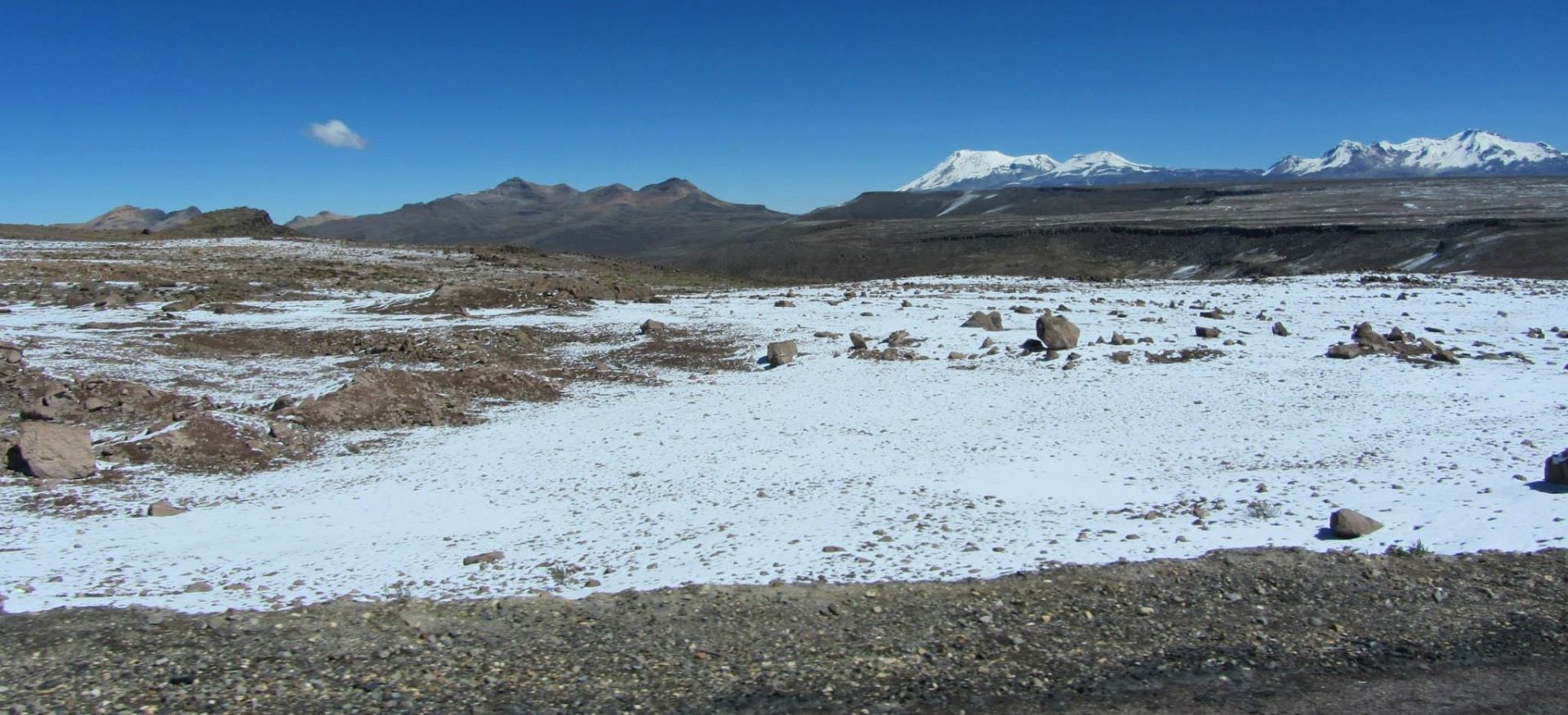
Inactive volcanic crater along the way
Day 1: Arequipa – Volcano Views & City Exploration
It was about an 8 minute drive from the bus terminal to our hotel in Arequipa. We checked in and freshened up before heading for breakfast.
To our surprise, we could see the El Misti and Chachani volcanoes right from our room. It was truly a pleasant sight.

Blue Planet Travellers
Vicunas
Arequipa lies about 1000 km southeast of Lima at an altitude of 2400 meters and is surrounded by the stunning peaks of the Andes. The city is dominated by El Misti, a perfectly conical snow-capped volcano about 5822 meters high, along with its sister peak Chachani. Known as the White City, Arequipa is famous for its colonial buildings made from white sillar stone formed from volcanic material. The reflection of sunlight on these white stones gives the city its name.

Blue Planet Travellers
El Misti Volcano
Later in the afternoon, we took a walking tour around the city. Almost everywhere we went, we could see the two volcanoes dominating the skyline.

Blue Planet Travellers
Drive through the Andes
We began our journey at Plaza de Armas, where the magnificent main cathedral stands. Its sheer size dominates the square, and in the background, the volcano El Misti rises majestically, a view that left us truly in awe. Together, the cathedral and the volcano create one of the most picturesque spots in the heart of Arequipa. In the center of the plaza, a charming pool and fountain added to the ambiance. When we visited, it happened to be a public holiday, and the plaza was packed with people. From our experience, it’s best to avoid visiting during weekends or regional holidays if you want to fully enjoy its beauty.

Blue Planet Travellers
Cathedral in Arequipa

Blue Planet Travellers
Plaza de Armas Arequipa
We then visited Mercado San Camilo, the oldest market in Arequipa. What a huge and bustling market it was! Vendors lined both sides of the aisles, selling all kinds of fruits, flowers, meats, cheeses, souvenirs, and handicrafts. Some of the vendors even offered samples of fruits we had never tried before, like tangy camu camu and creamy cherimoya, and they were actually delicious. We ended up buying a glass of each and sharing them among us so we could taste all these new flavors. The whole place had a wonderful aroma, the sweet scent of the fruits mixed with the freshness of the flowers, which made the experience even more special.
Later, we walked to Grau Bridge over the Chili River, from where we had a beautiful view of El Misti. This place was serene and we stood on the bridge for a while enjoying the view.
Next, we visited Mundo Alpaca, a textile store where we learned how to identify authentic alpaca fiber. It was very interesting to learn directly from the source.
We also explored San Lázaro, the oldest neighborhood in Arequipa, where we came across some of the city’s oldest houses. These houses, built from white sillar, a volcanic rock, had the charm of colonial architecture, giving the entire neighborhood a unique and striking appearance. Walking through the narrow streets, it felt like stepping back in time. We walked up and down the street a few times before returning back to our hotel.
With the day behind us, we felt a quiet satisfaction, grateful for the experiences and moments we had shared together, and we were already looking forward to another wonderful day tomorrow, exploring Chivay and the region’s thermal baths.

Blue Planet Travellers
Llamas in Patahuasi
Day 2: Journey to Chivay & Thermal Baths
We started early in the morning towards Chivay. We felt a little sorry for Varun, having to wake up so early, just like he does for school. In fact, to our surprise, he was the first one up! Shekar teased him, saying he’ll think of this next time he has to wake up for school.
The drive took us past the Misti Volcano and through the national park area, with scenic views of the Andes throughout the journey.
A few minutes into our drive, we reached our first stop at Patapampa Pass (El Mirador de los Volcanes), situated at 4,995 meters. This high-altitude pass literally took our breath away, not just because of the thin air, but also for the incredible view of multiple volcanoes stretching out in the distance.

Blue Planet Travellers
Patapampa Pass – el Mirador de los Volcanes
We also saw vicunas grazing, these animals that resemble deer and thrive in these harsh high-altitude conditions.
After about 2 hours of driving our next stop was Patahuasi, a small high-altitude village at 3,985 meters located in the Salinas and Aguada Blanca National Reserve. It is known for its landscapes and is where the road splits toward Chivay and Puno. Patahuasi is a great region for viewing South American camelids. Camelids are a family of animals in the Andes that includes wild vicunas, llamas, alpacas and guanacos.

Blue Planet Travellers
More vicunas grazing along the way

Blue Planet Travellers
Vicunas
We saw some native women with their herd of llamas, each adorned with colorful ribbons tied to their ears. The llamas were friendly and curious, often approaching us. Watching them hum softly and move gracefully around was surprisingly relaxing. We learned that the colorful ribbons are used to identify the llamas breed as well as their owners.
We were so excited to walk among the herd of llamas, and unlike what we had expected, they are very friendly animals. They surrounded us and never seemed afraid. Varun was especially thrilled to hear the humming sound they make, it reminded him of the calls of large birds. Watching the llamas hum and nibble slowly was incredibly relaxing, and the whole atmosphere felt calm and laid-back. It was such a lovely stop that we truly enjoyed.

Blue Planet Travellers
Chivay

Blue Planet Travellers
Mountain we climbed in Chivay
After about four hours, we reached Chivay, the largest town in the Colca Canyon region. We checked into our hotel and had lunch before some free time.
It’s worth noting that almost all tours in this region don’t provide accommodation during the road trip, so it’s important to plan ahead. Also, not all restaurants are located near the hotels, so when booking, it’s best to choose hotels that have on-site restaurants and ones where the tour operators can conveniently drop you off and pick you up.
Later, we were relaxing at the hotel, chatting with other travellers, the part of our trips we’ve always enjoyed, as it often gives us ideas for our next vacation. Right then, the hotel staff asked, “Who wants to do a short hike?” Without hesitation, we all said yes. After a long drive over the past few days, we thought a little walk would be perfect.
The area around the hotel was mostly plains, with a mountain stretching all the way to the horizon in front of us. We joked among ourselves, “Maybe they’re going to make us climb that mountain!”, after all, it was scorching hot. Only later did we realize… that was indeed the mountain we had to climb.
We encountered locals with llamas at the foothills, and one of the llamas playfully followed Varun wherever he went. He thoroughly enjoyed it and felt quite special with his new little companion, humming softly as it moved.

Blue Planet Travellers
Varun’s new friend

Blue Planet Travellers
Donkeys on the Andes mountains in Chivay
As we climbed higher, the hot, semi-dry weather made the trek challenging but also a perfect workout. We noticed lots of eucalyptus trees along the mountain, and even some cacti growing in the drier patches. Several donkeys carrying firewood made their way steadily up the slopes.
After about an hour of trekking, we reached the top of the mountain and were struck by the vastness of the landscape. The entire mountain region was covered with terraced fields for cultivation, and the views of Chivay from above were simply stunning.
The hike took about 2.5 hours in total and turned out to be an unexpected highlight of our day. We then returned to our hotel and enjoyed a well-deserved siesta.

Blue Planet Travellers
Chivay – view from the top of the moutain
After the hike, we were wondering how we were going to enjoy the hot thermal baths in such hot weather. But the moment we stepped out of our hotel, we realized the weather had turned very cool, it seems in this region, after sunset, it gets quite chilly.
The hot spring water is run through open pipes that cool it naturally along the way, and by the time it reaches the pool, it is a comfortable 35°C, perfectly soothing against the cool mountain air. Surrounded by mountains and desert landscapes, the setting was both beautiful and relaxing.
For safety, we were allowed a maximum of 30 minutes in the hot springs, which was more than enough time to enjoy the volcanic waters in such a natural environment.
It had been a long day, so we went straight from the thermal bath to the hotel to unwind.
Day 3: Colca Canyon, Condors & Arrival in Puno
In the early morning, before sunrise, we left our hotel in Chivay and drove towards Colca Canyon.
After about an hour, we reached Cruz del Condor, one of the best places in the world to spot Andean condors, and on most days, the condors can be seen here.

Blue Planet Travellers
Condor rising above Colca Canyon
From here, we walked a short distance to reach the Cruz del Condor viewpoint, from where we could see deep below the Colca River flowing through the canyon. Here, the river lay almost 1,500 meters below the viewpoint and about 3,400 meters below the surrounding Andean peaks.
The condors seemed to have nests built all along the canyon walls, and we had to wait until the sun reached the bottom of the canyon for the condors to rise. The condors hover on the thermal winds rising up from the Colca Canyon.
We waited for the sun to rise enough to create thermal currents. It was a long wait, however, the condors eventually began to rise one by one as the sun’s rays reached their nests. It was spectacular to watch them soar straight up from the canyon and glide past our heads.

Blue Planet Travellers
Colca Canyon

Blue Planet Travellers
Condor – largest flying birds on Earth
The condors did not seem to fly together, they were all separate, each flying alone. We saw several of them, but not once were we able to capture more than one condor in the same frame on our camera. They are enormous birds. The Andean condor is one of the largest flying birds on Earth, with wingspans of up to about 1 to 3 meters, making it the largest land-based flying bird in the world.
We did see a few condors fly close overhead, and yes, they were indeed massive. We spent a little over an hour there.
There were several viewpoints where we had to climb the nearby mountains. We tried just one of them, but we felt that the Cruz del Condor viewpoint was better located. Besides, the condors rise within a narrow window of about half an hour, and by the time we climbed to another viewpoint, they would already have been gone. So, we didn’t have enough time to explore the others.

Blue Planet Travellers
Condor – Cruz del Condor viewpoint
After spending over an hour there, we returned to Chivay for lunch before continuing our journey to Puno.
Just then, we realized that Chivay is very conveniently located for visiting Colca Canyon, as the condors can only be seen rising from the canyon around sunrise. With Chivay in such close proximity, it was easy for us to arrive there before sunrise.
On the way, we stopped at Lagunillas Lagoon at 4,400 meters, known for its peaceful landscapes and birdlife.
The contrast between the lagoon’s dark blue waters and the hay-colored mountains in July created a serene and striking landscape. We spent some time sitting quietly, taking in the beauty of nature, and then left.

Blue Planet Travellers
Lagunillas Lagoon
The drive to Puno took about 5.5 hours. Once we arrived, we checked into our hotel and rested after a long but rewarding journey.
Continue the Journey with us
Continue the journey with us as we explore the magic of Lake Titicaca, including the unique Uros Floating Islands and Taquile Island. Then follow along on the scenic route from Puno to Cusco one of the most interesting bus journeys in Peru, and discover the unforgettable experiences in Cusco.

Blue Planet Travellers
Women in Uros Island

Blue Planet Travellers
Lake Titicaca view from Taquile Island
Where to stay
Recommended Hotels
Arequipa
A tip before choosing your stay: There are many hotels in Arequipa with beautiful views of El Misti and Chachani Volcanoes. Make sure to book a room that faces the volcanoes. The view of the volcanoes in the morning is amazing and at night, the view is magical, though it’s dark, you can still make out the outlines of the volcanoes.
La hosteria (Where we stayed) This is a beautiful boutique which was once a palace/mansion. The room we stayed had beautiful view of the Volcanoes El Misti and Chachani. They have a very good breakfast. La hosteria is about 5 kms away from the bus Terminal Terrestre de Arequipa
Chivay
A tip before choosing your stay: Most of the hotels we saw were far from restaurants, which can be a problem if you’re not driving. Make sure to book a hotel that has an in-house restaurant.
If you’re driving, you might consider booking a hotel with thermal baths, so you don’t have to go anywhere else to enjoy them.
La Casa de MammYacchi Coporaque (Where we stayed)
This hotel is located in the centre of Chivay and had its own restaurant. The restaurants in Chivay are not close to the hotels and it is always advisable to find one with restaurant for all three style meals. They had a beautiful lounge
and set up fire in the evening it was great. The meals were buffet style which we enjoyed. Beautiful view of the surrounding area and a great place to stay.
Hotel El Refugio d’Elise (recommend this for the thermal bath )
This hotel sits right at the shore of the Colca river sound of the river flowing around the property can be heard.
They have natural thermal baths from the hot springs in the Andes mountains. The water is run through pipes to here. It is a fantastic place to stay if you want the thermal bath experience right within your door.
Puno
A tip before choosing your stay: There are hotels on the floating islands of Uros, and they are absolutely wonderful. Just make sure you’re not prone to motion sickness before staying, as the islands can gently sway.
Conde de Lemos Hotel (Where we stayed)
The location was great in the middle of the town. The rooms were big and the hotel is just behind the historic buildings in town.
Titicaca Origins Peru This is a wonderful hotel right on the Uros floating island. They provide free airport transfers. What other way to experience being on a floating island.
Tours We Recommend
- Arequipa
- This walking tour of Arequipa takes just 2–3 hours, making it perfect for your itinerary if you arrive by overnight bus and want to explore the city in the evening.
- Walking Tour through the Historic Center of Arequipa
- If you have more time in Arequipa, go for this
- Walking Tour Arequipa Including Santa Catalina Monastery (Recommended)
- Arequipa to Puno
- This 3 day tour covers the bus journey, guided stops at all the highlights between Arequipa and Puno, and excursions on Lake Titicaca once you arrive in Puno.
- From Arequipa: 3-Day Tour to Colca Canyon and Lake Titicaca (Accomodation not included)
- This 2 day tour covers the bus journey, guided stops at all the highlights between Arequipa and Puno, but does not include excursions on Lake Titicaca
- Colca Canyon 2 days from Arequipa with final transfer to Puno (Accomodation not included)
- Puno-Lake Titicaca
- Discover Lake Titicaca’s magic on a day trip to the Uros Floating Islands and Taquile. Explore local life, traditions, and culture while gliding across the world’s highest navigable lake, complete with music, dance, and breathtaking scenery.
- Full day trip to Lake Titicaca, the Uros and Taquile Islands
- Paddle across the stunning Lake Titicaca on a kayak tour starting in Puno, the highest navigable lake in the world.
- Kayaking at Uros Floating Islands and Taquile Island Tour
Tips and FAQ
When to Take the Nazca to Puno Road Trip
The best time to visit Machu Picchu is May to October, with June and July being peak months for good visibility. You can easily align a Lake Titicaca trip with this period. We went in July and enjoyed great views, full water levels, and blooming flowers on the islands, although it was quite hot.
Most travellers visiting Peru plan their trip around the best time to visit Machu Picchu. If you travel between June and September, places like Nazca, Arequipa, Chivay, and Puno can be very hot during the day, though the nights do cool down.
Altitude Awareness
The Nazca to Puno route mostly lies around 4,000 meters above sea level in the Andes, so some visitors may feel dizzy or light-headed. Stay hydrated and keep any necessary medication handy.
Bus Information
Recommendation
The bus services from Arequipa to Puno are indeed cheaper, however, note that you may have to pay for transfers from the bus stop to your hotel and back. We also found that multi-day tours are very convenient because the hotels are well-located, and you have the opportunity to rest after a long drive before your evening adventures. If you book transportation and accommodation separately, you won’t have that flexibility. We recommend booking multi-day tours to relax, which is especially convenient when travelling with kids.
You will need three different buses for the following routes:
- Nazca – Arequipa
- Arequipa – Chivay
- Chivay – Puno
There are many bus services available:
We booked our Nazca – Arequipa overnight bus via Cruz del Sur, which was very comfortable.
Important: When buying tickets, use the spelling Nasca and not Nazca. Both spellings are used interchangeably, but Cruz del Sur only recognizes Nasca.
In Arequipa, buses arrive at:
Terminal Terrestre de Arequipa
Arturo Ibanez 130, Arequipa 04011, Peru
(The website for the bus shows it in coordinates: 16°25’25.2″S 71°32’43.0″W)
Leave a Reply