
A Relaxed 2-Week Japan Itinerary for Families with Kids
This post includes:
Our Other Japan Posts:

TeamLab Borderless
Japan with Kids: Taking It at a Slower Pace
Planning a trip to Japan with kids can feel overwhelming. Japan has so much to see and do, but trying to visit every famous attraction can quickly turn your vacation into a race from one train station to another.
The last thing you want is to spend your holiday dragging tired kids from one attraction to another, rushing to catch the next train, and hearing “How much longer?” every few minutes.
That’s not what this itinerary is about.
Because when you’re travelling with kids, you don’t want every day to feel like a race – to rush rush! Sometimes they want to sleep in, take a break at the hotel, stop for a snack, or simply let the kids enjoy some downtime. We’ve made room for that too.
We’ve designed this 2-week kid-friendly Japan itinerary specifically with families with kids in mind. Instead of rushing from one attraction to another, we’ve kept a more relaxed pace, built in rest time, and grouped attractions by location wherever possible. We’ve also reduced the number of temples and shrines and skipped longer side trips such as Hakone and Kamakura, giving you more time to enjoy Japan without constantly feeling like you’re racing against the clock.
And it’s not just the kids who need a break – parents do too! Travelling with children means there is always something to think about, getting everyone ready in the morning, finding breakfast, keeping everyone fed, packing snacks and drinks for the day, looking for that one missing sock, finding a lost toy, making sure everyone has used the bathroom before leaving, dealing with tired little legs, and somehow keeping everyone happy while you’re trying to enjoy the trip yourself.
We’ve taken all of that into consideration when designing this itinerary. There are days to explore and have fun, but also time to slow down, rest at the hotel, grab a relaxed meal and simply take a breather. Because a family vacation should be enjoyable for parents too, not another two weeks of running around looking after everyone.
So, we’ve put together a 2-week Japan itinerary framed to not just take your kids to Japan, but also helping them enjoy their time in Japan. After all, it’s their vacation too – not a school assignment!
Before we get to the itinerary, here are a few tips and things we learned from our own trip that we think are worth knowing before you go.
Why You Should Avoid Taxis/Uber in Japan
Before our trip, we read quite a few travel blogs and itineraries about Japan, and one piece of advice kept coming up again and again not to take a taxi/Uber. But we couldn’t find out why. When you are planning your first trip to Japan, you naturally wonder, if taxi/Uber services are available, why shouldn’t I use them? Are they unreliable? Are they expensive? Is there a better alternative?

Blue Planet Travellers
Slow down to enjoy the fish ponds in Japan with your little ones
After travelling through Japan ourselves, we now understand why so many travellers give this advice, and we feel it is something worth explaining.
Yes, taxis and Uber are available in Japan. But based on our experience, we would strongly recommend not treating them as a normal transportation option during your trip.
We learnt this the hard way.
On one particular journey, we travelled from one place to another and the fare was around $50 (Uber estimate was $20). When we made the return journey from the same place back to where we had started, we expected the cost to be reasonably similar. Instead, the Uber estimate again showed around $20, but by the time we reached our destination, we were charged approximately $120.
That was a huge difference for essentially the same journey in the opposite direction.
We had another experience that made us even more cautious. On a different taxi/Uber ride, the driver apparently felt that he had already driven far enough for the amount that had been quoted. He told us that, according to the map, this was our destination and that he would only drop us there. He literally left us in the middle of a busy road, and we had to figure out how to continue from there ourselves.

Blue Planet Travellers
Arashiyama bamboo forest – kyoto

Blue Planet Travellers
Torii Gates at Fushimi Inari Shrine
During our trip, whenever we had to rely on a taxi/Uber, the experience was not normal. This is why, after experiencing Japan for ourselves, we came to a very simple conclusion:
In Japan, plan to walk or use public transportation. Treat taxi/Uber as an absolute last resort, rather than as an option you can depend on.
After travelling through Japan ourselves, we now understand why this advice comes up so often, and we feel it is something worth explaining. We would have appreciated knowing this before we arrived, and we don’t want someone planning their Japan trip to rely on taxi/Uber services.
They do exist, but in our experience, they are not really an option you should build your itinerary around.
Japan’s public transportation system is extensive and reliable, and walking is going to be a much bigger part of your trip than you may initially expect. In fact, this is one of the reasons you need to be careful when planning your itinerary. A place that looks only a kilometre away on the map may involve walking to a station, taking a train, walking again from the station, and then exploring a large temple, shrine, garden, or neighbourhood on foot.
It may sound like more effort, but this is simply how you should plan for Japan.

Blue Planet Travellers
Trains In Japan
The Shinkansen, Japan’s famous high-speed bullet trains, make long-distance travel even more memorable. Reaching speeds of over 300 km/h, they are incredibly fast, but the journey itself is part of the experience. Many routes pass through beautiful landscapes, so sitting by the window and watching the Japanese countryside go by becomes part of the fun.
Before our trip, we found an overwhelming amount of information about Japan’s train system, with countless lines, train names, and route options. It can feel complicated at first, but our advice is simple: don’t spend too much time trying to memorize train lines. For most visitors, all you really need to know is that Shinkansen trains are used for longer-distance travel, while local trains connect cities, attractions, and stations.
The main thing to know before your trip is that Shinkansen journeys are the trains you’ll want to book in advance, especially for popular routes and busy travel periods. For most local trains and subway rides, you don’t need to buy a ticket each time. Simply use an IC card such as Suica and tap in and out as you travel.
SmartEX is the official online service for booking Shinkansen tickets, and it’s a convenient option if you want to reserve your long-distance bullet train journeys in advance.
Once you’re in Japan, Google Maps with the public transit option makes getting around much easier. It tells you which local train to take, where to change, and how to get to your destination, so you don’t need to figure out the entire train system before your trip.
We travelled on more than a hundred local trains during our time in Japan, and surprisingly, we never found them uncomfortably crowded. Even when seats were full and we had to stand, there were usually only a few other passengers standing nearby. The experience was always orderly, efficient, and comfortable.
Before You Arrive in Japan: Immigration & Arrival Forms
Immigration in Japan can easily take up to two hours to get through immigration. Thankfully, there’s a simple way to save yourself a lot of time.
Before your trip, fill out the Visit Japan Web arrival form online. Its a lengthy form and you need to register with an userid and pssword. Once you’re finished, you’ll receive a QR code that you’ll simply scan when you arrive.During our trip, this made the immigration process much quicker.
Technically, you can complete the paper form while standing in line, but we wouldn’t recommend it. As the form is fairly long, and immigration officers have to manually enter all of that information into their system, which slows everything down not just for you but for everyone waiting in line. Filling it out online before your flight or before you leave is much easier and helps you avoid unnecessary delays.
We recommend you create your account ahead of time and update your information whenever you need to. If anything changes before your trip, simply edit your details and generate a new QR code. You can edit the form multiple times and generate a new QR code after each update.
You can complete the arrival form for Japan here.

What Are IC Cards And Why We Need Them To Travel Within Japan
Once you’re at the airport, one of the first things you’ll want to do is buy an IC card. Think of it as Japan’s version of a prepaid card, except it’s useful for much more than just trains.
You can use them almost everywhere, on trains, buses, at convenience stores, grocery stores, taxis, and even at some attractions.
Using it is incredibly simple. Just tap your card when entering the train station and tap it again when you leave. The system automatically calculates your fare based on how far you’ve travelled.

Blue Planet Travellers
Cute little kid in a kimono!
Which IC Card Should You Buy?
When we started researching Japan, we found there were several different IC cards available. Honestly, it was a little confusing at first.
After doing our research, and after actually using one during our trip, we’d simply recommend buying the Standard Suica Card from the JR East ticket machines at Narita Airport.
That’s exactly what we did, and it worked everywhere we travelled, including Tokyo, Kyoto, Osaka, and Sapporo. Recharging it was easy too, We were able to recharge them at convenience stores like 7-Eleven, Family Mart etc..
Another bonus is that when you’re leaving Japan, you can get a refund for any unused balance remaining on the card. Just remember that you’ll still need the card to get back to the airport, so don’t return it too early.
We loaded 10,000 yen (approx $65) onto each card when we first bought them, which is the maximum amount you can load at one time. Depending on how much you use public transportation and make purchases with your IC card, you’ll likely need to recharge it throughout your trip. Fortunately, reloading your card is quick and easy at train stations and convenience stores.
One day, we forgot to check the balance on our Suica card, and when we tried to leave the train station, the ticket gate wouldn’t open because we didn’t have enough funds to tap out. At first, we thought we were stuck, but then we noticed recharge machines conveniently located inside the station near the exit. We topped up the card in just a couple of minutes, tapped it again at the gate, and were on our way. So if this ever happens to you, don’t panic, every station has recharge machines, making it a quick and easy fix.

Blue Planet Travellers
Kiyomizu dera temple in Kyoto
Note: One thing we’d skip is the Welcome Suica card. While it works the same way during your trip, any money left on the Welcome Suice Card when you leave Japan isn’t refundable. Since the Standard Suica does allow refunds, we think it’s the better choice.
Note: If you’re travelling as a family, make sure everyone, including children, has their own card. Every passenger needs to tap in and tap out individually, and having separate cards makes using trains and buying Shinkansen tickets much smoother.
A Little Reality Check: Japan Involves a Lot of Walking
One thing to keep in mind when planning a trip to Japan with kids is that you’ll probably walk a lot more than you expect! Japan is incredibly easy to explore, but getting around often means walking to and from train stations, navigating large stations, changing lines, going up and down stairs, and getting on and off trains and buses. With kids, it’s not unusual to end up walking at least 5 km in a day, even when you’re not intentionally planning a long walking day. Adult travellers can easily find themselves walking 20-30 km in a day when sightseeing, especially in larger cities. Even kids who are usually great little walkers can start to feel tired or overwhelmed when they’re doing it day after day, especially when you’re also carrying bags, navigating busy stations and trying to keep everyone together. That’s why you need to keep your itinerary flexible. Think of the itinerary above as a guide rather than a schedule you have to follow exactly. If everyone is happy and full of energy, keep exploring, if those little legs are done for the day, head back to the hotel and call it a win. You don’t have to see everything for your family to have an amazing time in Japan!

Blue Planet Travellers
Boat ride through neon lights – Dotonbori, Osaka
This is why we encourage you to slow down and give yourself time at the places you visit. I have covered the major attractions in this itinerary, but I have also written a separate post on 18 experiences to have in Japan beyond siteseeing, which you may find useful while planning your trip.
I have kept all of this in mind while putting together this itinerary. Our advice is simple: start early when you can, leave some flexibility in your days, and don’t rush Japan. You may miss an attraction, but you may also gain an experience that you would have missed if you had been rushing to the next place.

Blue Planet Travellers
Kids draw their own sea creatures, that come to life on these walls – TeamLab Borderless

Trying our luck with the claw machine!! – Osaka
14 Days in Japan at a Glance
Tokyo -Kyoto -Nara – Osaka – Tokyo
- Days 1 – 5: Tokyo
- Days 6 – 9: Kyoto ( and Nara)
- Days 10 – 12: Osaka
- Day 13: Osaka to Tokyo
- Day 14: Depart Tokyo
Our 14 Day Kid-Friendly Japan Itinerary
Day 1 – Flight – Arrive in Tokyo, Japan.
Arrive at Narita International Airport in Tokyo, Japan. Once you land, clear immigration and customs. (See Immigration Forms & Arrival in Japan for details on completing the arrival forms before your trip.)
Getting to Your Accommodation From Narita Airport – N’EX (Narita Express)
After collecting your luggage and clearing customs, you are still inside Narita International Airport. This is where you’ll make your way to the N’EX (Narita Express) train station (follow Trains or Railways sign), which is located within the airport.
Taxis and Uber are available at the airport, but we wouldn’t recommend taking them from Narita because they can be extremely expensive for such a long journey. (See our section on Avoiding Taxis and Uber later in this post.)
Instead, we recommend taking the N’EX (Narita Express). It’s one of the most convenient and affordable ways to travel from Narita Airport into central Tokyo.
The N’EX platform is a bit of a walk from the arrivals area, so don’t be surprised if it takes some time to get there, especially when you’re carrying luggage. Just follow the signs for the Narita Express or JR trains.
The N’EX trains are comfortable and have dedicated luggage racks, making them a great option after a long international flight. Since these trains run specifically between Narita Airport and Tokyo, you’ll notice that almost everyone onboard is travelling with luggage. The luggage racks can sometimes fill up, but the trains themselves are generally comfortable and not overly crowded. If the luggage racks are full, don’t worry, you’ll see plenty of other passengers keeping their suitcases with them, so you won’t be the only one travelling with large bags.
The N’EX will take you to major stations such as Tokyo Station or Shinjuku, depending on where you’re staying. From there, you may need to take a local train to a station closer to your hotel. Tokyo’s train system is very efficient, so don’t worry if you need to make one more connection.
Once you reach the station closest to your hotel, you can walk if it’s nearby. If you have heavy luggage or are tired after a long flight, this is where taking a short taxi or Uber ride can make sense. You can also check with your hotel to see if they offer a shuttle or transfer service from the nearby station.
Your Japan adventure begins in Tokyo! After a long flight, don’t try to squeeze in too much sightseeing. Check into your hotel, get settled and take a gentle walk around the neighborhood.
If everyone still has energy, enjoy your first Japanese dinner and perhaps explore the bright streets of Shinjuku.
Keep it easy today, the adventure starts tomorrow.
- Arrive in Tokyo
- Airport to hotel
- Check in and rest
- Easy neighborhood walk
- Dinner
- Early night
Where to stay: Tokyo(Shinjuku or Shibuya)
Day 2: Little Planets & Odaiba
Today is all about letting the kids have some fun! Start with Little Planets, an interactive digital play experience designed with children in mind. It’s a great way to introduce the little ones to immersive digital art and activities where they can touch, play and explore.
After Little Planets, continue exploring Odaiba at a relaxed pace. Because several attractions are close together, you can enjoy the area without spending the day jumping on and off trains.
Suggested order:
- Little Planets
- DiverCity Tokyo Plaza
- Giant Unicorn Gundam
- Lunch
- Tokyo Joypolis – optional, especially for older kids
- Odaiba Seaside Park
- Rainbow Bridge views
- Dinner
What about teamLab Planets?
If you’re travelling with older children or adults who would like to experience teamLab, teamLab Planets in Toyosu is another option. It is one of Tokyo’s most famous immersive digital experiences and is particularly known for its interactive installations.
For this kid-friendly itinerary, we’ve chosen Little Planets because it is specifically geared toward younger children and fits naturally into your Odaiba day.
You don’t need to visit every attraction in Odaiba. Pick one or two that suit your children’s ages and leave some time to relax.
Where to stay: Tokyo(Shinjuku or Shibuya)
Day 3: Tokyo in Miniature & Beyond
Today is all about imagination, technology, and miniature worlds, a day designed especially with kids in mind. We actually recommend Small Worlds first and teamLab Borderless second. Small Worlds is a more contained museum experience, while teamLab is the bigger sensory “wow” experience and works nicely as the highlight of the day. Plan to spend around 2 to 3 hours at each attraction, starting with Small Worlds Miniature Museum
Suggested order:
- SMALL WORLDS Miniature Museum
- Lunch
- TeamLab Borderless
- Dinner
This route keeps the day concentrated in the same general part of Tokyo instead of sending you back and forth across the city.
Where to stay: Tokyo(Shinjuku or Shibuya)
Day 4: Tokyo Disneyland
Today is all about Disney! Give Tokyo Disneyland the entire day and let the kids enjoy the magic without trying to squeeze another attraction into the schedule.
With classic Disney characters, familiar rides, themed areas, parades and plenty of treats, this is a day where you can simply enjoy the park at your family’s own pace.
Arrive early, enjoy the rides and themed areas, take plenty of snack breaks and stay for the evening atmosphere if the kids still have energy.
Suggested plan:
- Tokyo Disneyland
- Classic Disney rides and attractions
- Character experiences
- Disney snacks and treats
- Lunch inside the park
- More rides and attractions
- Parade or evening entertainment
- Dinner
Tip: A full Disney day can be tiring, so don’t plan anything else afterward.
Where to stay: Tokyo (Shinjuku or Shibuya)
Day 5: Harajuku, Anime, Pokémon & Shibuya
If your kids love anime, manga or Pokémon, be prepared to spend some time shopping today! Once they walk into an anime or character store, getting them back out in 20 minutes may be easier said than done.
So rather than packing this day with lots of sightseeing, we’ve deliberately left plenty of time for browsing, exploring and letting the kids enjoy the shops.
Start in Harajuku, where you’ll find colorful streets, character shops, Japanese sweets and plenty of things to catch the kids’ attention. Take your time along Takeshita Street before continuing toward Shibuya.
Suggested order:
- Harajuku
- Takeshita Street
- Japanese crepes and other snacks
- Character and anime shops
- Lunch
- Continue toward Shibuya
- Pokémon Center
- Anime, manga and character stores
- Shibuya Crossing
- Shopping
- Dinner
Optional: Gotokuji Temple & the Lucky Cats
If your kids love cats, you can start the morning at Gotokuji Temple, famous for its collection of maneki-neko (lucky cat) figurines.
It’s a relatively short visit and gives you a fun cultural experience before heading into the much busier shopping areas.
However, don’t feel like you have to add it. If your kids are big anime or Pokémon fans, you’ll probably want to give them as much time as possible in Harajuku and Shibuya instead!
Parent tip: Leave some flexibility in your schedule for the anime and character stores. Kids can easily spend much longer browsing than you expect, and that’s okay. They are going to have fun!!
Where to stay: Tokyo
Day 6: Tokyo to Kyoto & Fushimi Inari
Today you leave Tokyo and head to Kyoto by Shinkansen. Since this is a travel day, we’re keeping the schedule light, but that doesn’t mean you have to spend the entire afternoon at the hotel.
If you arrive in Kyoto around midday, check into your hotel, have lunch and give everyone some time to rest. Later in the afternoon, head to Fushimi Inari Taisha, one of Kyoto’s most recognizable sights.
The famous orange torii gates make this a particularly fun place to explore with kids. And the best part? You don’t have to hike all the way to the top. There are some 10000 Torii gates, walk through the gates as far as everyone feels comfortable, take some photos and enjoy the atmosphere.
We especially recommend visiting later in the day, around sunset and into the early evening. The changing light makes the torii gates look beautiful, and the experience can feel very different from visiting in the middle of a busy afternoon.
If you are looking for a completely unforgettable, picture-perfect experience in Kyoto that your kids will actually love, look no further than renting traditional kimonos and heading to the iconic Fushimi Inari Taisha.
Local rental shops make the process magical. Kids get to choose their own vibrant colors and patterns, and professional staff help them get safely and comfortably tucked into their layers.
Suggested order:
- Tokyo to Kyoto by Shinkansen
- Hotel check-in
- Lunch and rest
- Head to Fushimi Inari around sunset
- Rent and wear a Kimono
- Walk through the torii gates
- Stay until it gets dark to see the torii gates beautifully lit up
- Explore the area around Fushimi Inari
- Dinner
- Return to hotel
Family tip: Don’t turn Fushimi Inari into a mission to reach the top. With kids, the goal is to enjoy the experience, not conquer the mountain! Turn around whenever little legs have had enough.
Where to stay: Kyoto
Day 7: Arashiyama
Arashiyama is one of the best areas in Kyoto for families because the day isn’t simply about visiting temples.
Start early at the famous Bamboo Grove, then continue toward the river and Monkey Park.
Suggested order:
- Arashiyama Bamboo Grove
- Tenryu-ji
- Arashiyama streets
- Togetsukyo Bridge
- Lunch
- Arashiyama Monkey Park
- Riverside walk
- Explore local shops
- Dinner
The combination of bamboo, monkeys, river scenery, snacks and shops makes this a much more varied day for kids.
Where to stay: Kyoto
Day 8: Kiyomizu-dera – Higashiyama – Gion
Today is your main traditional Kyoto day, but we’re keeping the number of cultural sites limited.
Start at Kiyomizu-dera and then walk downhill through the atmospheric streets of Higashiyama. Stop along the way for Japanese sweets, drinks and snacks.
Suggested order:
- Kiyomizu-dera
- Sannenzaka (walking street)
- Ninenzaka (walking street)
- Lunch
- Yasaka Shrine
- Gion (night view with lights)
- Pontocho
- Dinner
You don’t need to add several more temples to the day. One or two memorable cultural experiences are plenty when travelling with children.
Where to stay: Kyoto
Day 9: Kyoto to Nara to Kyoto
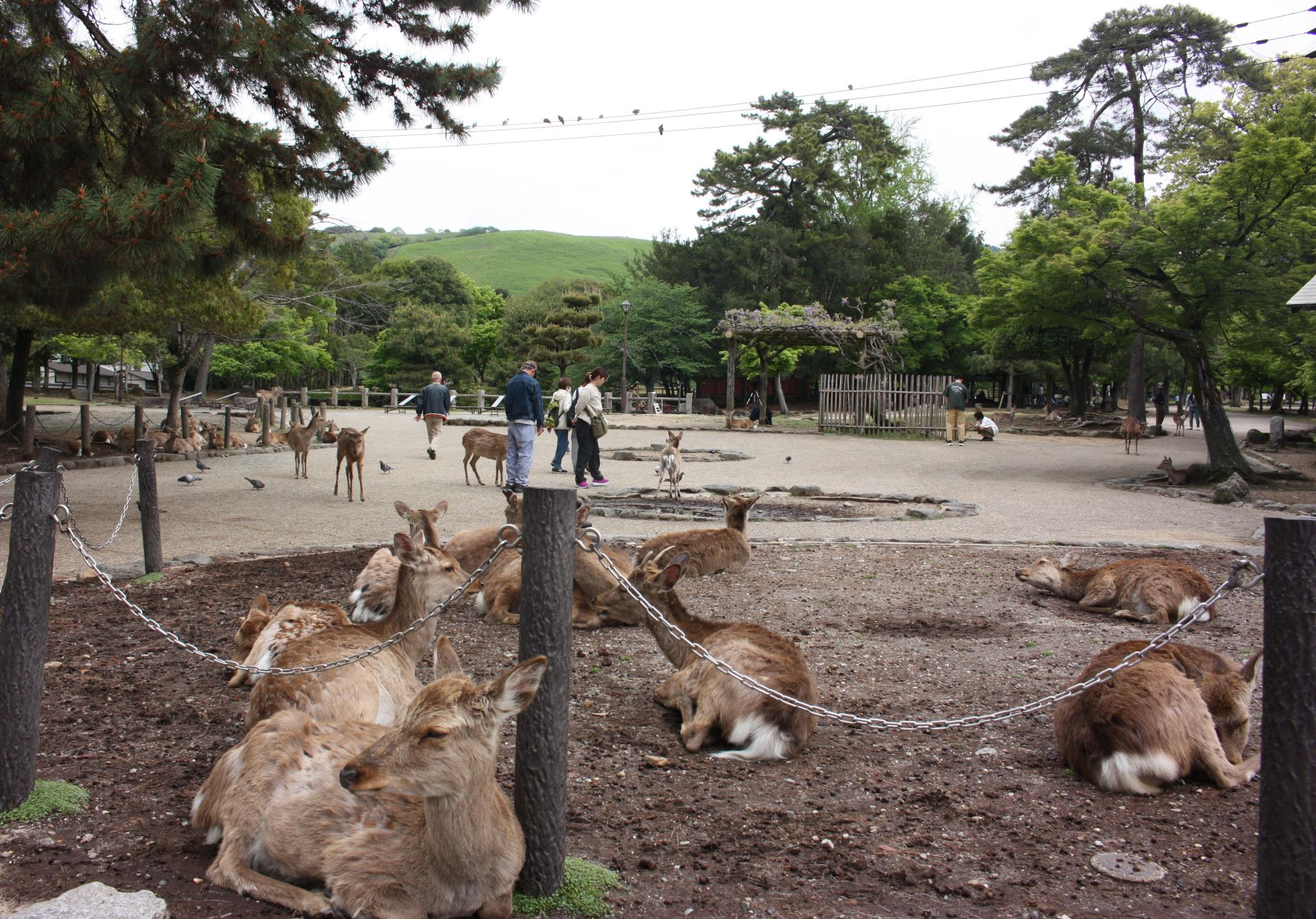
Today is one of the days your kids may remember most – meeting the famous deer of Nara!
Travel from Kyoto to Nara(train) in the morning and spend the day exploring Nara Park. Kids will love seeing the deer wandering freely around the park, and you can buy special deer crackers from vendors throughout the area to feed them.
But here’s a little warning, the moment those deer crackers are in your kids’ hands, the deer know about it! Before you know it, they’ll be surrounded by curious deer waiting for their share.
So have your camera or video ready before you hand over the crackers, the reactions can be priceless!
Teach the kids to hold the crackers out calmly, and remind them to give a little bow to the deer. Most of the deer will bow back (but only after feeding them)!
By the way, feeding the deer isn’t just fun for kids, adults can enjoy it too! I had so much fun feeding the deer myself, especially when they all came running over looking for more crackers. It was definitely one of the highlights of our day in Nara.
Suggested order:
- Kyoto to Nara (Train ride 1.25 hrs)
- Nara Park
- Buy deer crackers
- Feed the deer
- Todai-ji Temple (Great Buddha)
- Isuien garden (optional – closes sharp at 4:00pm)
- Lunch
- Explore more of Nara Park
- Nara to Kyoto
- Dinner near your hotel
Nara is one of the few places where a traditional Japanese experience can feel like a real adventure for kids. And don’t worry about seeing every temple, the deer are the stars of the day!
Nara is worth keeping in this family itinerary because the deer make the experience completely different from simply visiting another temple.
Where to stay: Kyoto
Day 10: Kyoto to Osaka & Family Rest Day
After several busy days exploring Tokyo, Kyoto and Nara, you might already be thinking about getting back home. We hear you! Here’s a free day to slow down and give everyone, including the parents, a well-deserved break.
Start the day by traveling from Kyoto to Osaka by Shinkansen. The journey is incredibly quick, taking around 13 minutes, making it an easy transfer between the two cities.
Why take the Shinkansen?
You might wonder why we’re recommending the Shinkansen when there are other local trains between Kyoto and Osaka. For families travelling with luggage, we found it to be a simple and comfortable option because you can take your luggage with you rather than having to deal with complicated transfers while carrying bags and keeping an eye on the kids.
Once you arrive in Osaka, check into your hotel and take it easy for the rest of the day.
Today is your family’s rest day, no sightseeing checklist required!
Suggested plan:
- Kyoto to Osaka by Shinkansen (13 minutes)
- Check into your hotel
- Relax and unpack
- Enjoy the hotel facilities, if available
- Take a nap or let the kids have some downtime
- Have a relaxed lunch
- Do some laundry or catch up on packing
- Short walk around the neighborhood
- Easy dinner
- Early night
After all the walking, trains, sightseeing and excitement of the first part of the trip, don’t underestimate how much everyone will appreciate a slow day.
Sometimes the best day of a family vacation is the one where you don’t have to be anywhere!
Day 11: Universal Studios Japan
It’s time for another big theme-park day!
Spend the entire day at Universal Studios Japan. For families, this can easily be one of the highlights of the trip.
If your kids love Nintendo, make sure to plan ahead for Super Nintendo World and check the current entry requirements before your visit.
Suggested plan:
- Universal Studios Japan
- Super Nintendo World
- Rides and attractions
- Character experiences
- Lunch inside the park
- More attractions
- Evening entertainment
- Dinner
This is another day where you don’t need to add anything else to the schedule.
Where to stay: Osaka
Day 12: Osaka Aquarium to Tempozan to Dotonbori
After another busy day, today’s attractions are a little slower paced.
Start around Tempozan with Osaka Aquarium Kaiyukan, then head toward Namba and Dotonbori later in the afternoon.
Suggested order:
- Osaka Aquarium Kaiyukan
- Tempozan Harbor Village
- Lunch
- Travel to Namba
- Dotonbori
- boat ride late evening (once it gets dark)
- Shinsaibashi walking street
- Street food
- Glico Running Man (take a picture)
- Dinner
This gives you a nice combination of animals, food and shopping without making the kids walk around the entire city.
Where to stay: Osaka
Day 13: Osaka Castle – Den Den Town – Tokyo
Make the most of your final morning in Osaka before returning to Tokyo.
Start around Osaka Castle, then head south toward Nipponbashi’s Den Den Town for anime, manga and gaming.
Suggested order:
- Osaka Castle
- Osaka Castle Park
- Lunch
- Den Den Town
- Anime and manga shops
- Gaming stores
- Arcades
- Character merchandise
- Osaka to Tokyo by Shinkansen
- Hotel check-in
- Dinner
If the family is tired, skip Osaka Castle and spend more time in Den Den Town before taking the train to Tokyo.
Where to stay: Tokyo
Day 14: Depart Tokyo
Sadly, your family adventure is coming to an end.
Keep your final morning simple. Have breakfast, check out and make your way to the airport.
If your flight is later in the day, you may have time for some last-minute shopping near your hotel.
Suggested order:
- Pack your luggage
- Breakfast
- Check out
- Last-minute souvenirs
- Tokyo to Narita airport (Nex train takes about 2 hours)
- Fly back home
And hopefully, you’ll leave Japan with plenty of great family memories, and kids already asking when you’re coming back!

Blue Planet Travellers
A temple full of lucky cats – Gotokuji temple – Tokyo
Why This is a Kid-Friendly Japan Itinerary
This itinerary isn’t designed to help you check the maximum number of attractions off a list. It’s designed to help you enjoy Japan as a family.
We’ve deliberately:
- Kept attractions close together whenever possible
- Reduced unnecessary train journeys
- Limited the number of temples and shrines
- Skipped Hakone and Kamakura
- Kept Nara because kids love the deer
- Added Little Planets
- Included Tokyo Disneyland
- Included Universal Studios Japan
- Added anime, Pokémon and gaming experiences
- Included Osaka Aquarium
- Added a full rest day in Osaka
- Left some afternoons and evenings flexible
The goal is simple: less rushing, less complaining about tired feet, and more time enjoying Japan together.
You don’t have to see everything on your first trip. Sometimes the best family memories happen when you slow down, stop for an unexpected snack, let the kids explore a shop, or simply spend an afternoon relaxing at the hotel.
Planning Japan Without Kids or With Older Kids?
If you’re travelling without children or with older kids and want to see more of Japan’s traditional sights and popular day-trip destinations, check out our Japan 2 Week Itinerary: The Ultimate 14-Day Guide for First-Time Visitors. This itinerary covers more of Japan’s must-see sights and classic destinations, if you want to travel at a fast pace and can manage longer sightseeing days.
That itinerary follows a more sightseeing-focused route and includes destinations such as Hakone and Kamakura, making it a great alternative for travelers who want to pack more cultural and historical experiences into their two weeks.
For families with young kids, however, we recommend the itinerary above. It is designed to be more relaxed, more kid-friendly and easier to manage, with a balance of culture, theme parks, animals, anime and plenty of time to simply enjoy being in Japan.
Want to Experience More of Japan?
Japan is about much more than visiting the famous sights. If you want to add a few unique cultural, food and everyday experiences to your trip, check out our 20 Things to Do in Japan Beyond Sightseeing post. From wearing a kimono and trying traditional foods to visiting an onsen, collecting goshuin and experiencing everyday Japanese culture, there are plenty of ideas to make your trip even more memorable.

Blue Planet Travellers
Couldn’t resist these colorful fluffy dolls – Osaka
Where to Stay in Japan
Where you stay in Japan can become part of the experience itself. During our travel, we were amazed by the level of hospitality we experienced in Japanese hotels. From the warm welcome at check-in to the thoughtful details provided for guests, the service and attention to detail made our stays memorable.
Many hotels provide yukatas or traditional clothing for guests to use, allowing you to experience a small part of Japanese culture even after returning to your hotel. These are the kinds of details that you may miss when staying in apartments. Some hotels also offer complimentary activities for guests during their stay, adding another layer to the experience. The hotels we stayed at offered different activities each day, including making ramen from scratch, playing traditional games like spinning tops, and even learning how to wear a kimono. These activities usually ran for about an hour and were a great way to experience something unique without having to travel anywhere.
We had already planned our itinerary and unfortunately could not fit these activities into our schedule. However, for families travelling with children, these hotel activities can be a wonderful way to take a break between sightseeing days while still experiencing something uniquely Japanese.
You can explore hotels across Japan here.
Another experience worth considering is staying in a traditional ryokan, especially one with an onsen. A ryokan stay offers a deeper experience of Japanese hospitality, with traditional rooms, provided yukatas, Japanese meals, and a slower pace that allows you to experience customs that have been preserved for generations. Staying at an onsen ryokan can be one of the most memorable experiences in Japan, combining relaxation with a deeper connection to Japanese traditions.
You can explore ryokan stays in Japan here.
For those who want to experience Japan’s famous hot spring culture, an onsen stay is another wonderful option. The experience is not only about bathing in natural hot springs but also about enjoying the peaceful surroundings, traditional atmosphere, and Japanese approach to relaxation.
You can explore onsen stays in Kobe Japan here and Onsen stays in Hakone here
For us, choosing accommodation was not just about finding a place to sleep, it was about adding another layer to our Japan experience. We found that staying in hotels, ryokans, or onsen accommodations offered much more than we expected, often at prices that were comparable to apartments in similar locations. While ryokans and onsen stays can cost more than regular hotels, they offer a unique experience that is worth considering during your journey through Japan.
If experiencing Japan beyond sightseeing is your goal, choosing accommodation that reflects Japanese hospitality can make your trip even more memorable.

Blue Planet Travellers
Claw machines and toys everywhere in Japan
Tours we Recommend
- TOKYO:
- Disney Land: Add a little Disney magic to your Japan itinerary with a full day at Tokyo Disneyland. With a 1-day passport, you can explore the park’s seven themed lands, enjoy classic and thrilling attractions, watch colorful parades and shows, and meet beloved Disney characters. It’s a fun-filled day for both kids and adults, and you can explore the park at your own pace.
- Tokyo Disneyland Admission Ticket
- Disney Sea: For families visiting Tokyo, Tokyo DisneySea is a wonderful option for a fun-filled day with kids. With beautifully themed areas, exciting attractions, character experiences, and plenty to explore, it offers something for both children and adults. A 1-day passport makes it easy to enjoy the park at your own pace and experience one of Japan’s most unique Disney destinations.
- Tokyo DisneySea 1-Day Pass
- Anime and Gaming:
- For anime, manga, and gaming fans, an Akihabara walking tour is a fun way to explore Tokyo’s famous pop-culture district. The tour takes you through retro game shops, arcades, hobby stores, and gachapon spots, with opportunities to play Mario Kart and discover anime and gaming treasures along the way. It’s a great option for families looking to experience a different side of Tokyo
- Tokyo Akihabara, anime, manga, games walk
- Akihabara Anime, Games & Otaku Culture Walk
- Tokyo – Skytree: Tokyo Skytree is one of the best places to enjoy panoramic views of Tokyo from above. When booking your tickets, make sure to select access to both the Tembo Deck and Tembo Galleria, which takes you higher up toward the summit for an even more impressive view.
- We recommend visiting around sunset or in the evening. This way, you can enjoy the city in daylight, watch the sunset, and then see Tokyo light up after dark. The nighttime city view is spectacular and makes the experience even more memorable.
- Tokyo Skytree Admission ticket
- KYOTO / OSAKA
- Nara Early Morning Tour:
- Start your day in Nara before the crowds arrive and get up close with the city’s famous deer. You’ll have the chance to feed the deer and watch them famously bow for treats, while exploring Nara Park and some of the city’s most beautiful sights on a guided morning tours from Kyoto or Osaka.
- Nara early morning deer tour (from Kyoto or Osaka)
- Explore Nara – Morning tour (from Kyoto)
- Kimono Rentals
- One of the most memorable ways to experience Kyoto is to dress up in a traditional Japanese kimono and explore the city’s historic streets, temples, and shrines. With a variety of kimono rental and dressing experiences available, you can choose from different styles, colors, and patterns before heading out for the day. It’s also a wonderful opportunity to take photos around some of Kyoto’s most scenic neighborhoods and landmarks.
- Experience Kyoto in a Kimono
- Kimono Rentals with Hairstyling and Accessories
- Kimono / Yukata Rentals – 5 min from Kiyomizu-dera
- Tea Ceremony and Kimono Rentals:
- When booking a tea ceremony, the authenticity and ambience of the place matter a lot. If the tea ceremony takes place in a ryokan, with traditional tatami floors and a beautiful view of the garden, it really adds to the experience.
- Most tea ceremonies also include a kimono dressing and rental experience. They let you choose and help you put on a kimono, and style your hair to match the outfit. You then participate in the tea ceremony wearing the kimono.
- The best part is that you can usually keep the kimono for the rest of the day, until around 4 or 5 p.m. You can walk around, explore the area, and take pictures while wearing it.
- So, with one experience, you essentially get to enjoy two authentic Japanese experiences, a traditional tea ceremony and wearing a kimono.
- Our Choice:
- Maikoya Nishiki: Kimono Tea Ceremony with Matcha and Sweet
- If you have already rented a kimono and experienced wearing one elsewhere, then we recommend this tea ceremony, as it does not include kimono rental Tea Ceremony in a Garden Tea House near Kiyomizu-dera
- OSAKA – Universal Studios
- A day at Universal Studios Japan in Osaka was one of the most exciting stops when travelling with kids in Japan. From stepping into the magical world of Harry Potter to exploring Super Nintendo World and enjoying the incredible rides and shows, there is something for everyone. The kids will be thrilled, and honestly, the adults might have as much fun!
- Get your Universal Studios Japan tickets
- OSAKA – Dotonbori:
- The boat ride through Dotonbori takes you along the canal, surrounded by neon-lit buildings on both sides and the lively energy of Osaka’s city centre. We recommend doing this at night, when the colourful neon signs light up the area and create a completely different atmosphere. It’s a fun way to experience Dotonbori from a different perspective while taking in the vibrant nightlife.
Leave a Reply